Art
Alexander Seen from Pompeii
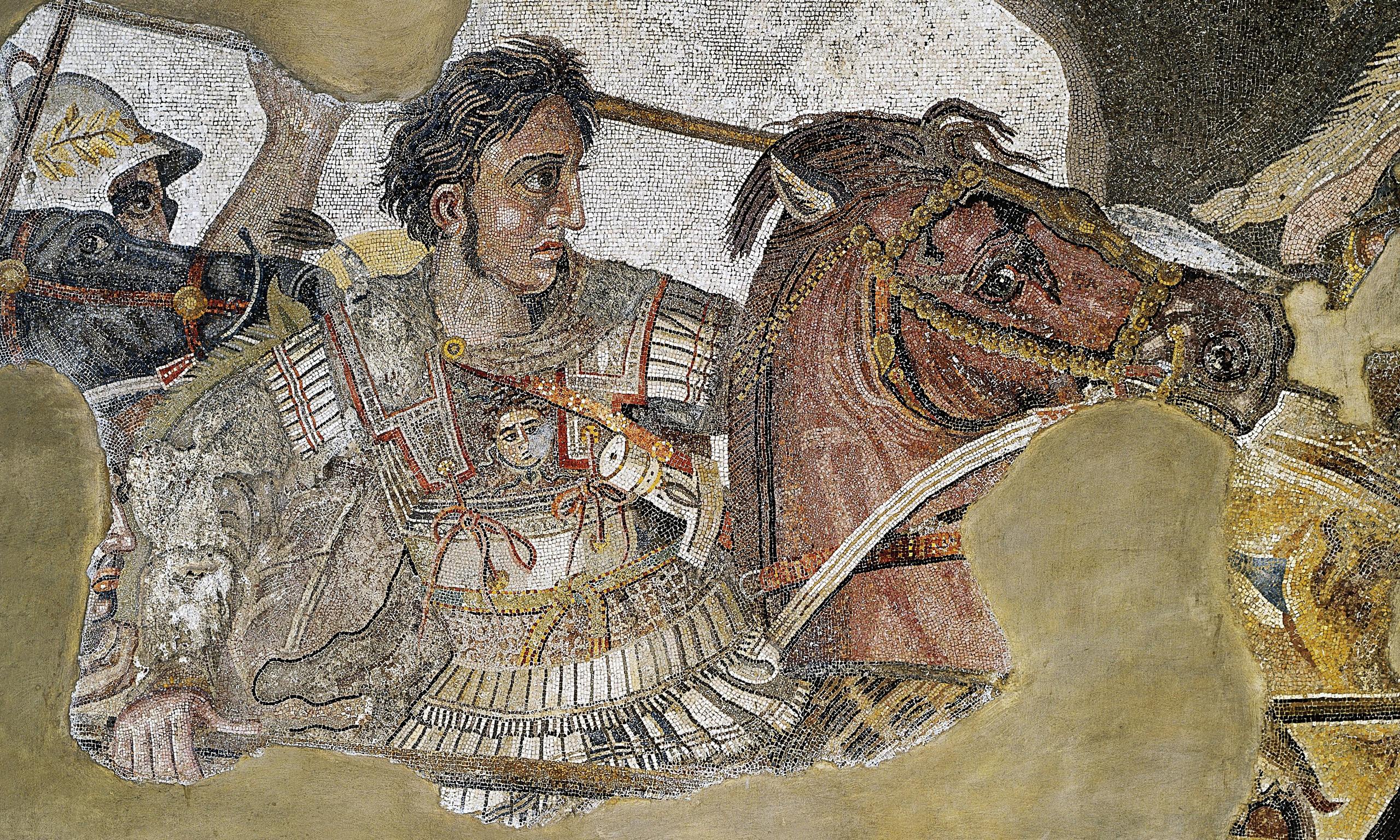
Discovered in 1831 in Pompeii's House of the Faun, the Alexander mosaic freezes the Battle of Issus in millions of tesserae: the young Macedonian charges Darius III, gaze fixed on the Persian king attempting to flee in a chariot. Probable copy of a lost Hellenistic painting — perhaps by Apelles, whom Plutarch mentions —, the image shows how Rome admires the Greek conqueror while integrating him into its own imperial mythology. Battle becomes salon painting, domestic luxury as much as military memory.
The composition opposes two worlds: left, the Macedonian phalanx in movement; right, Persian panic, abandoned shields, swept-away horses. Alexander is helmetless, hair in wind; Darius extends his hand — ambiguous gesture between supplication and command. The technique imitates painting: shadows, reflections on armor, troubled sky, subtle gradations obtained with tesserae of different sizes.
Preserved today in Naples, the work links three worlds — Pompeii, Alexandria, Persepolis — around the same narrative: the decisive encounter that opens the Persian Empire to Macedonian armies and redraws the ancient world map. Understanding this mosaic is seeing how a rich second-century BCE Roman decorated his dwelling with another empire's glory, already become decor.