History
Agincourt, Mud Decides
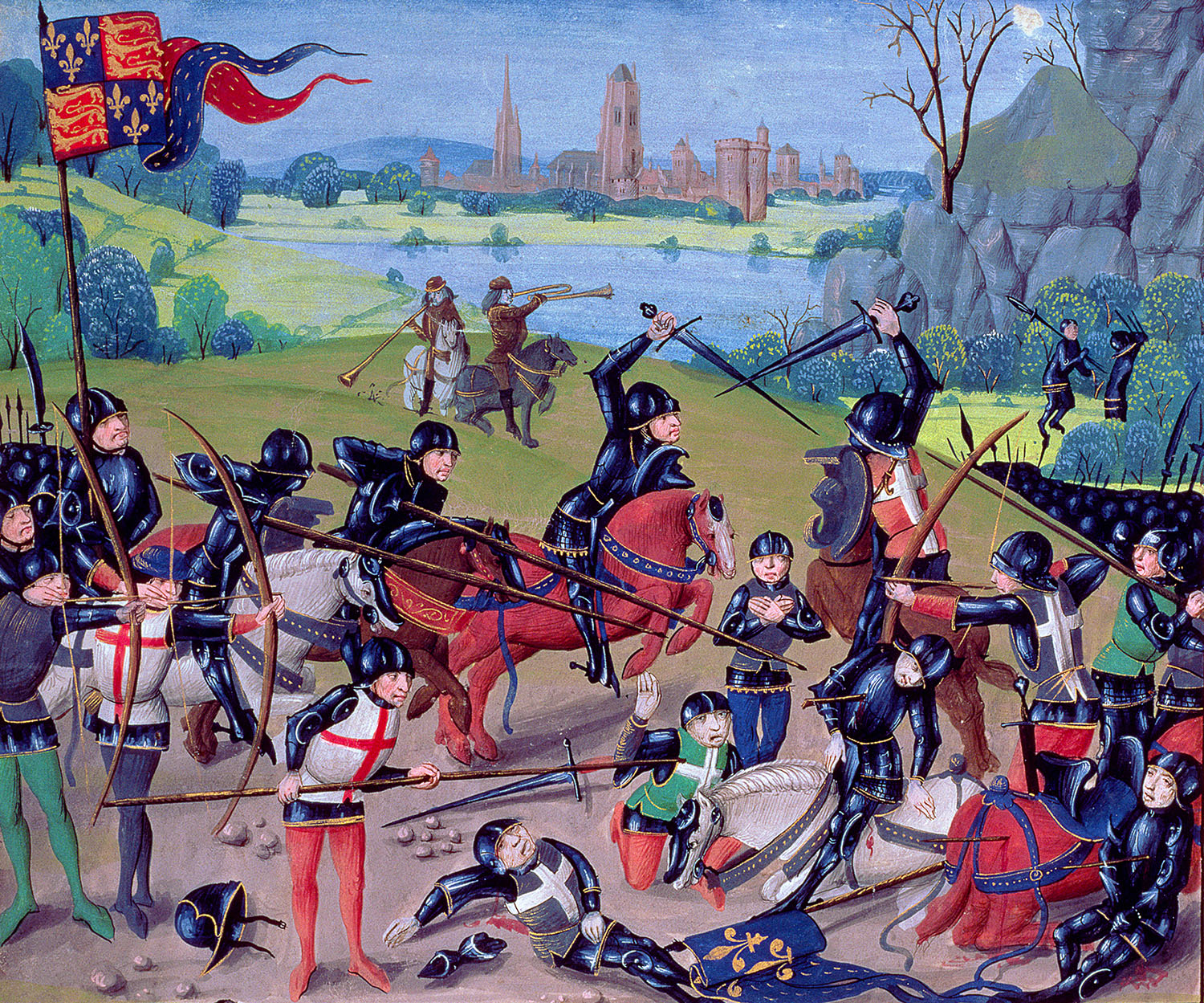
On October 25, 1415, at Agincourt, an exhausted and outnumbered English army crushed the French—longbow archers, muddy terrain, charges of immobilized heavy knights. The battle became a symbol of tactical efficiency over chivalry, though English propaganda amplified the narrative.
Henry V of England claimed the French throne; after the siege of Harfleur, he attempted to reach Calais with an army weakened by dysentery. Near Agincourt, he encountered a much more numerous French force—knights in full armor, nobles eager for individual glory. The terrain, recently plowed and waterlogged, transformed the French charge into a mire: horses and men sank, became targets for Welsh and English archers armed with longbows capable of piercing some armor at short range.
The melee turned to massacre: the French in the front line, trapped, suffocated under their own weight; archers used hammers and daggers when arrows ran out. English chronicles speak of thousands of dead French nobles; French sources minimize or contest. Agincourt didn't immediately change the Hundred Years' War's course, but it reinforced Henry V's prestige and the longbow legend—a peasant weapon become tactical domination instrument.
The battle illustrates how mud, fatigue, and discipline can compensate for numerical superiority—a lesson reused in English nationalist narratives, from Shakespeare to today. Rereading Agincourt means separating real tactics from mythology: an undisputed English victory, but also a narrative carefully cultivated by a court needing to legitimize an expensive war.