Art
Chandigarh, Concrete City
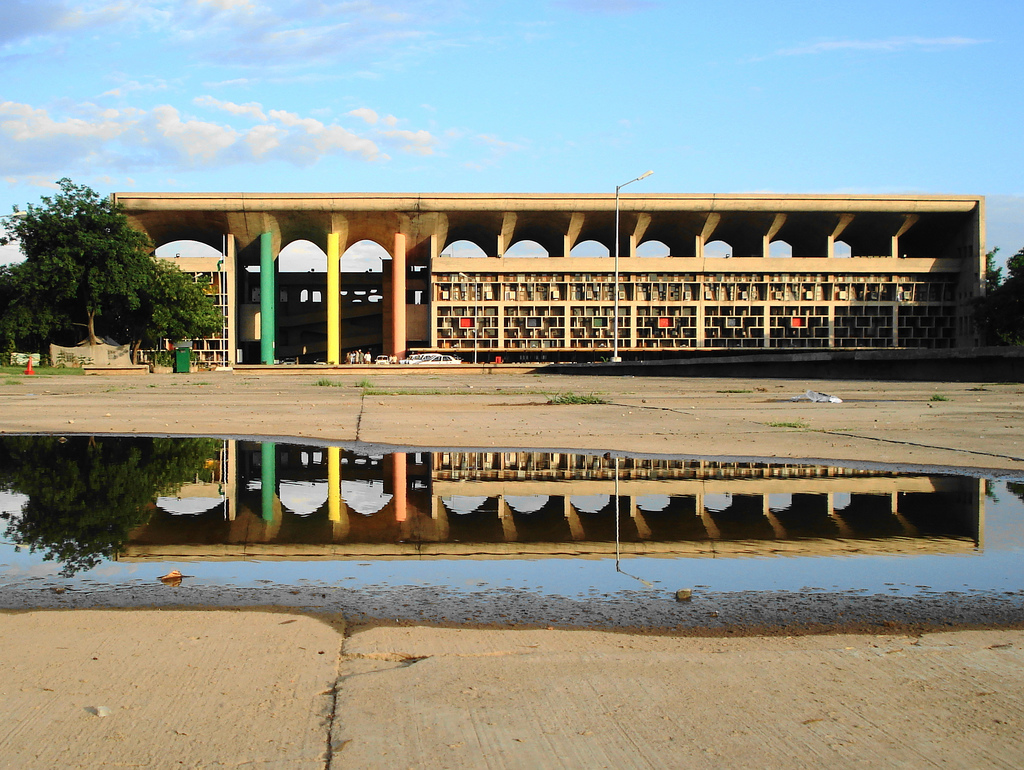
Chandigarh, capital designed from scratch for Punjab after the 1947 Partition, was entrusted to Le Corbusier—a tabula rasa city where orthogonal plan, raw concrete, and Housing Units embodied modernist urbanism serving a new State.
India's 1947 Partition left Punjab without a capital: Lahore had become Pakistani. Nehru ordered a new city, symbol of modernity and unity, and entrusted the project to a modernist architects team—Matthew Nowicki, then Albert Mayer, and finally Le Corbusier from 1950. Le Corbusier drew the plan in numbered sectors, separated pedestrians and automobiles, imposed raw concrete administrative buildings—the Capitol, Secretariat, High Court—and left an immediately recognizable visual imprint.
Chandigarh is not a pure Plan Voisin application: Le Corbusier adapted his principles to Indian climate, budgets, local materials. Housing Units and residential sectors welcomed civil servants, merchants, Partition refugees. The city functions—it's now prosperous—but critics denounce automobile scale, social fragmentation between sectors, erasure of preexisting Indian urban practices on agricultural land.
Chandigarh remains one of the rare master-modernist fully planned capitals still inhabited and expanding. It illustrates the promise and limits of total urbanism: a city conceived as social machine, become partial UNESCO heritage, where 1950s concrete dialogues with a 21st-century Indian megalopolis.