Law & society
Theatrical Trials
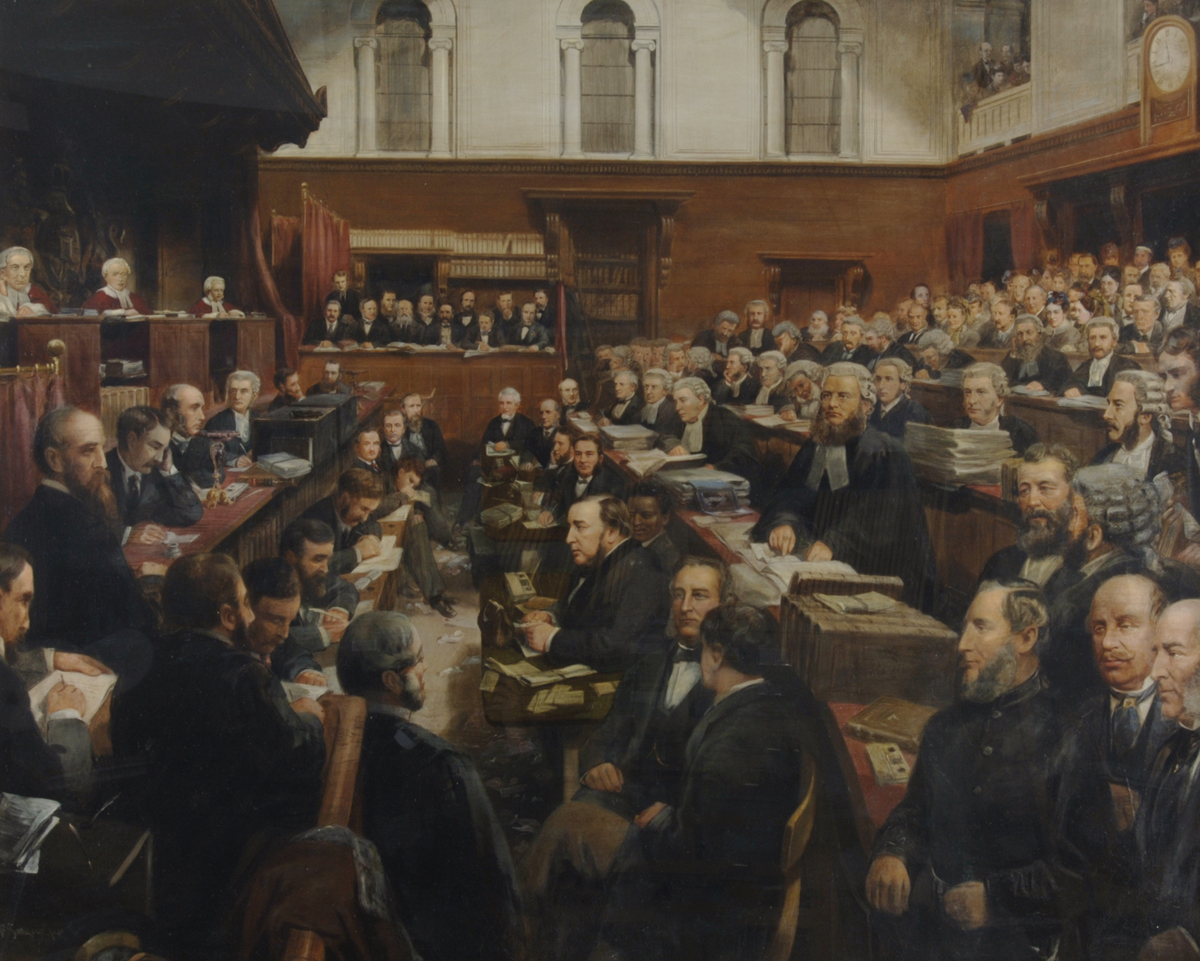
In the 19th century, some mock trials were organized as true public spectacles mixing satire, politics and fashionable entertainment. Actors played accused, witnesses and judges before full rooms. These stagings allowed as much to criticize real justice as to transform its rituals into a form of popular theater.
The 19th century developed a particular fascination for public trials. Major criminal cases attracted large crowds and were widely relayed in newspapers. In this context also appeared mock trials organized as social or satirical entertainments. Private clubs, fashionable salons or public events staged false judicial affairs with improvised lawyers, witnesses and symbolic verdicts.
The public generally knew the trial's fictional character but took pleasure in observing judicial codes reproduced seriously. These spectacles often functioned as indirect criticisms of political power or administrative absurdities. Judicial ritual indeed possesses a natural theatrical dimension: costumes, spatial hierarchy, interrogations and the verdict's suspense.
Mock trials made this theatricality visible. They also showed to what extent modern justice fascinated crowds well beyond its practical function. The tribunal became a narrative space where truth, performance and power constantly mixed. These spectacles moreover announced several contemporary forms of media fascination for major judicial affairs.