Art
The Impossible Mirror
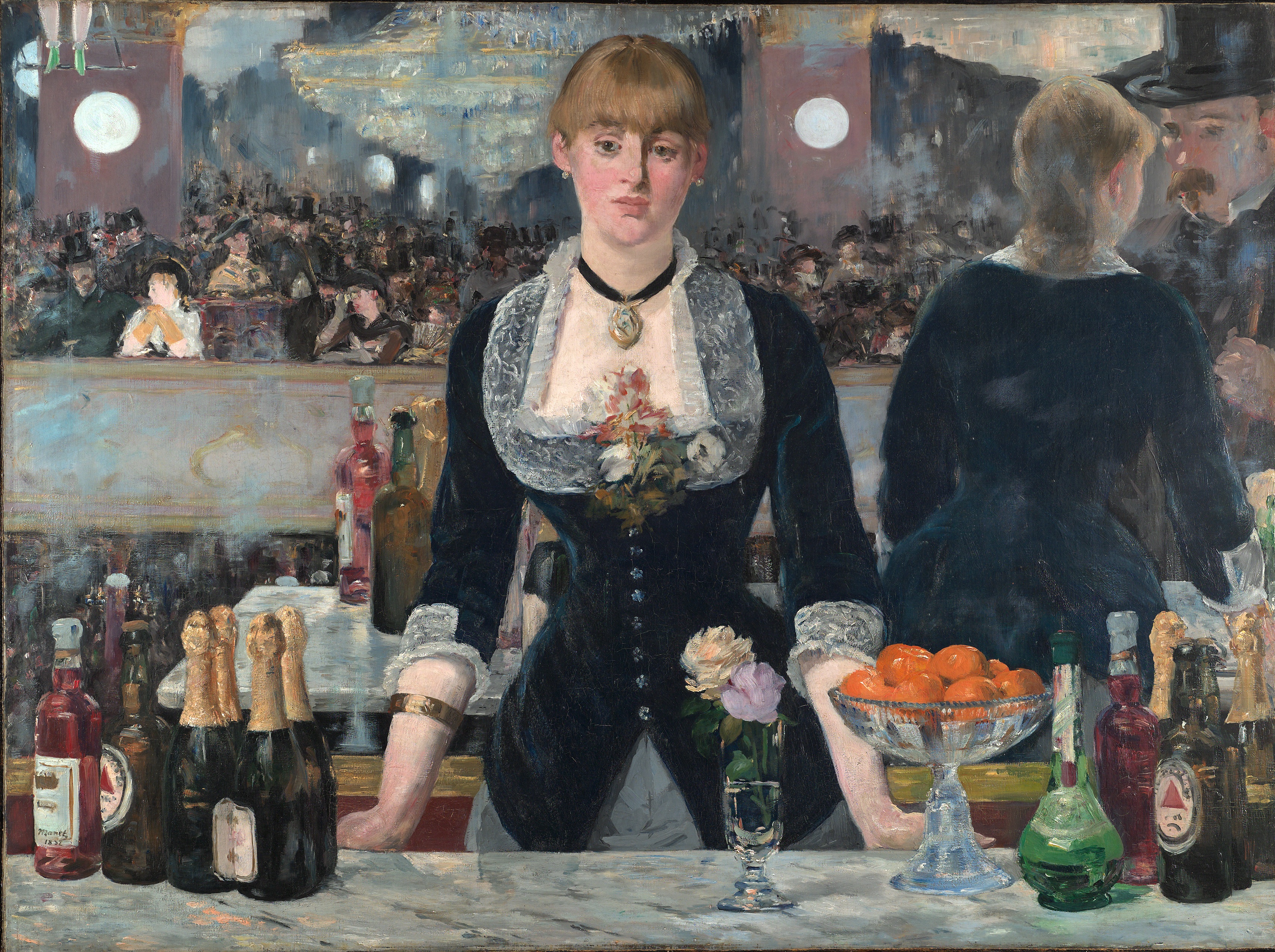
In A Bar at the Folies-Bergère, the reflection visible behind the barmaid seems geometrically incoherent. The client's position in the mirror doesn't exactly correspond to what a spectator should observe from the painting's real viewpoint. This visual instability transforms a simple Parisian café scene into a deliberately troubling construction.
Painted in 1882, the work represents a barmaid standing behind the counter of the Folies-Bergère, a famous Parisian establishment mixing café, show and fashionable nightlife. At first glance, the composition seems relatively realistic.
Yet the large mirror occupying the background quickly produces a spatial unease. The barmaid's reflection appears slightly offset while the client's position visible in the mirror seems incompatible with what the spectator facing the counter should occupy.
Art historians still debate the exact reasons for this anomaly. Some propose a deliberately impossible optical construction, others evoke a decentered viewpoint or a subtle manipulation of perspective to produce a feeling of psychological instability.
This ambiguity fits well with Manet's late research on modern urban perception. The painting doesn't only seek to faithfully represent a Parisian place but also the visual and social fragmentation of modern life. The barmaid's detached gaze accentuates this impression even more. Despite the luminous and festive agitation reflected behind her, the main figure seems isolated, almost psychologically absent at the very center of the spectacle.