Art
The Noisy Exhibitions
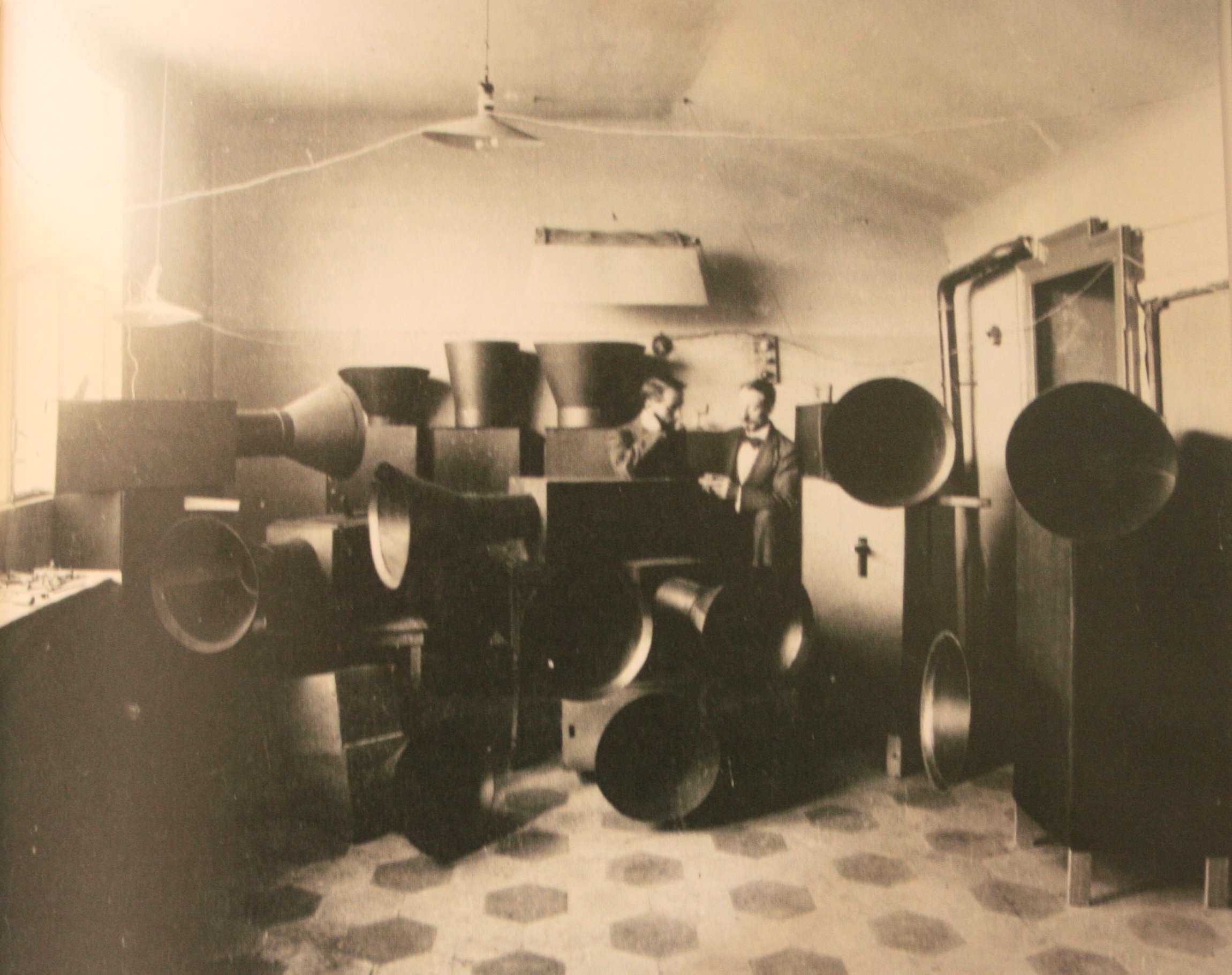
Certain Italian Futurist exhibitions of the early 20th century were deliberately aggressive toward visitors. Mechanical noises, motors, shouts, violent lights, and chaotic performances transformed galleries into almost industrial spaces. The Futurists no longer wanted a silent art contemplated calmly: they sought to produce a modern physical shock.
Italian Futurism appeared in the early 20th century around Filippo Tommaso Marinetti with a radical fascination for speed, machines, electricity, and large industrial cities. The Futurists violently rejected traditional museums, which they considered dead spaces turned toward the past. Their exhibitions and performances sought on the contrary to reproduce the chaotic energy of the modern world.
Certain Futurist evenings became famous for their voluntary aggressiveness: motors activated in the halls, shouted readings, insults to the public, and continuous mechanical noise. The composer Luigi Russolo even built sound machines called intonarumori intended to produce industrial sounds imitating motors, explosions, or urban vibrations.
The objective was to transform perception itself. The spectator must no longer simply look at a work from a distance; they must be physically plunged into an environment of speed and noise. This aesthetic corresponds to an era fascinated by automobiles, airplanes, factories, and electrical technologies. The Futurists considered modern din as a new artistic beauty.
Their experiments would later influence experimental music, contemporary performance, and several forms of immersive installations of the 20th century.