Art
Este's Studiolo
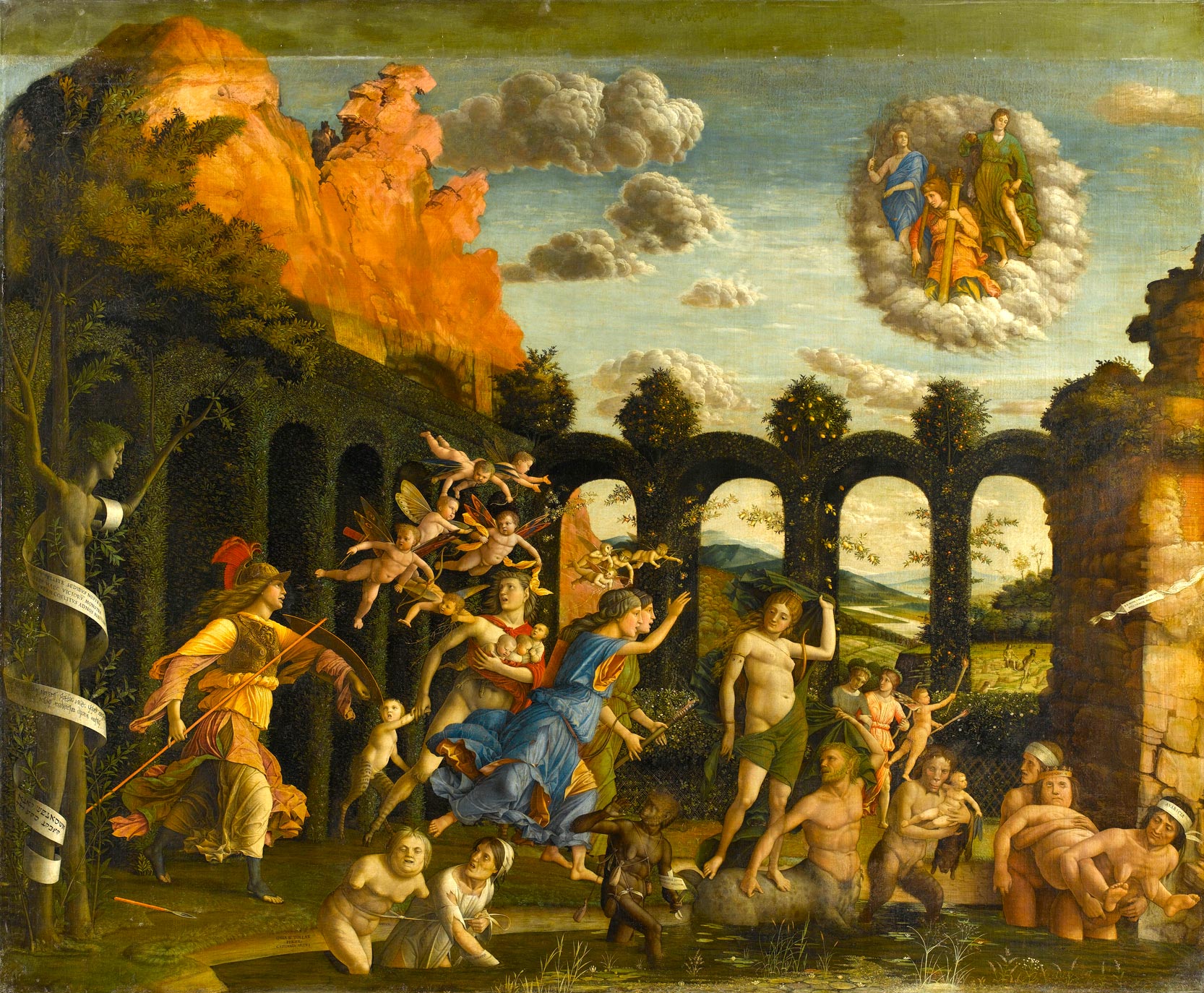
Designed by Isabella d'Este in Mantua at the beginning of the 16th century, the studiolo is a small private room where allegorical paintings, antiquities, and rare objects serve to impress a handful of carefully selected visitors. Mantegna's painting shown here was part of it: Minerva Expelling the Vices from the Garden of Virtue, a visual moral lesson commissioned by Isabella for this space.
Isabella d'Este occupies an exceptional position in Renaissance Italy. Marchioness of Mantua, diplomat, and influential patron, she maintains relationships with several of the greatest artists and humanists of her time. Her studiolo, arranged in the ducal palace, constitutes one of the most famous private spaces of Renaissance culture.
The painting visible on the card—Minerva Expelling the Vices from the Garden of Virtue—is not a simple illustrative choice. Mantegna paints it around 1502 on Isabella's commission, precisely to adorn this studiolo. Minerva chases grotesque figures embodying vices from an enclosed garden; above, the Virtues throne in light. Isabella imposes this program: to show that wisdom must dominate passions, exactly the message she wants associated with her image as a cultivated and powerful woman.
Unlike large public reception halls, the studiolo is designed as a restricted place intended for carefully selected visitors. The works exhibited there do not merely seek to impress through their material richness. They also function as intellectual demonstrations based on complex references to ancient mythology, moral philosophy, and contemporary humanist debates.
Isabella thus commissions paintings from artists like Mantegna or Perugino, sometimes imposing extremely precise iconographic programs. The chosen themes often valorize mastery of passions, virtue, or intelligence's victory over chaos. The studiolo also prefigures future European cabinets of curiosities. Ancient antiquities, rare stones, medals, and exotic objects coexist there in a logic of learned collection. Possessing and interpreting these objects becomes a way of constructing an aristocratic identity based on knowledge as much as birth.