Art
The Most Expensive Blue
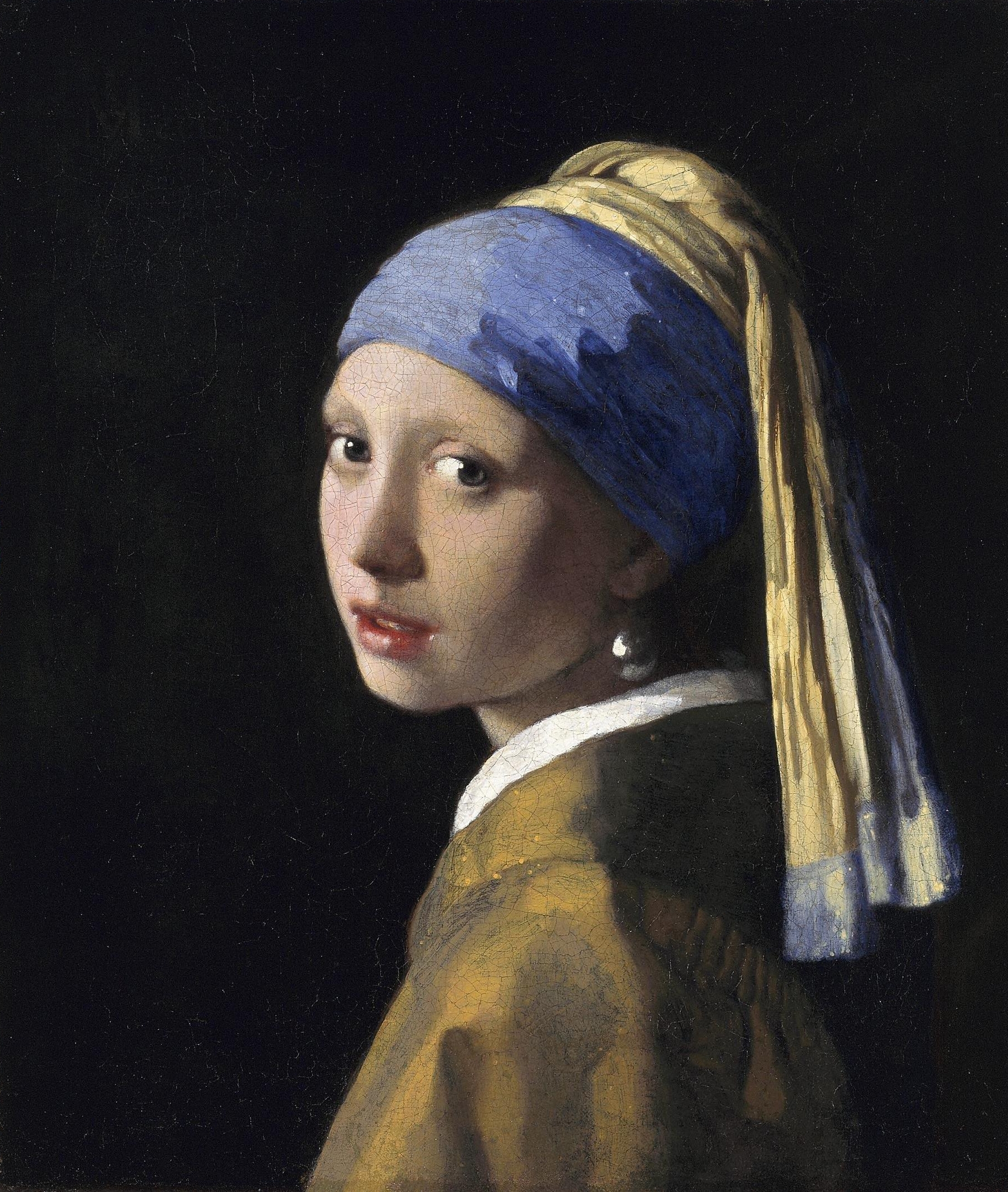
In Girl with a Pearl Earring, the intense blue of the turban comes from an extremely precious pigment: natural ultramarine made from lapis lazuli imported from Afghanistan. In the 17th century, this color sometimes cost more than gold. Yet Vermeer uses it with unusual generosity, even in areas where no one would really expect it.
Painted around 1665, Girl with a Pearl Earring seems strikingly simple today: a face, a turban, a dark background, and a shining earring. But this simplicity rests on extremely sophisticated materials.
The blue of the turban is obtained through natural ultramarine, produced from lapis lazuli extracted mainly in the Afghan mountains. The pigment had to travel long and costly trade routes before reaching European workshops. In Vermeer's time, this color was one of the most precious available to painters.
Many artists used it sparingly. Vermeer, however, seems fascinated by its luminous properties. Technical analyses show that he sometimes employs this pigment even in invisible layers or mixed with other shades to obtain a particular optical vibration.
Light plays a central role in the painting. The skin appears almost moist, the lips delicately reflect the lighting, and the pearl itself is painted with very few brushstrokes. The current black background was probably greener originally before the pigments aged. Girl with a Pearl Earring thus fascinates less through an explicit narrative than through an almost chemical mastery of light and pictorial matter.