Culture
The Bridge That Danced
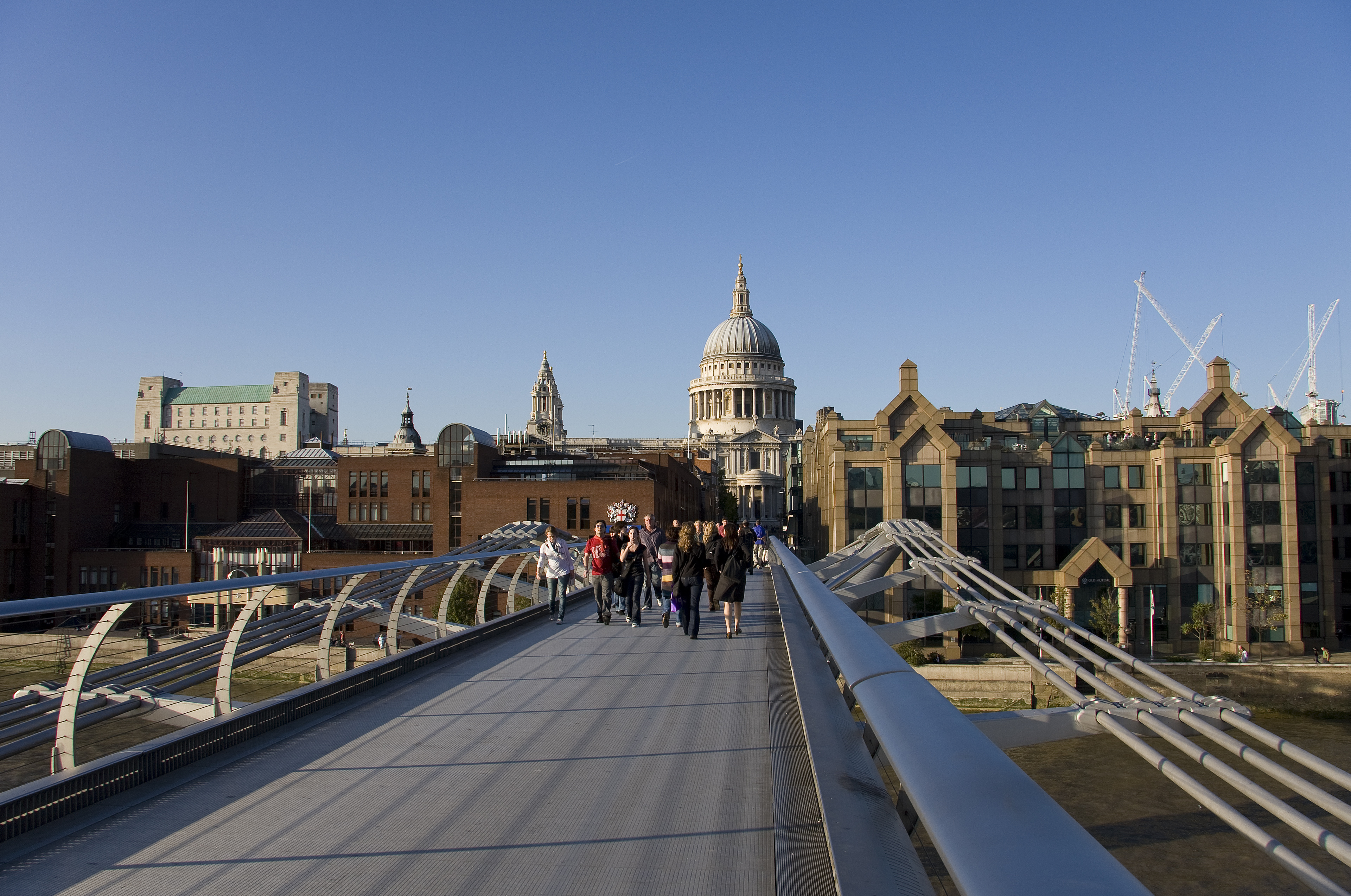
At its opening in June 2000, London's Millennium Bridge began to sway laterally under the crowd's footsteps—an unexpected phenomenon that forced its closure two days later. A slight oscillation of the deck was enough to unbalance pedestrians: to compensate, all spread their legs at the same rhythm and in the same phase, amplifying the oscillation, which in turn pushed walkers to synchronize further.
Engineers named this mechanism "synchronous lateral excitation." It had not been anticipated: the standards of the time considered only vertical vibrations. With about two thousand people on the structure, the effect became spectacular—proof that a crowd is not a passive load but a system coupled to the structure it crosses.
Closed then equipped with a battery of dampers, the bridge reopened in 2002. The case has become a civil engineering classic: it imposed modeling pedestrians as active oscillators, and recalls that even the most elegant bridges can tremble under the involuntary rhythm of those who cross them.