Architecture
The Taj Mahal, Tomb of Love
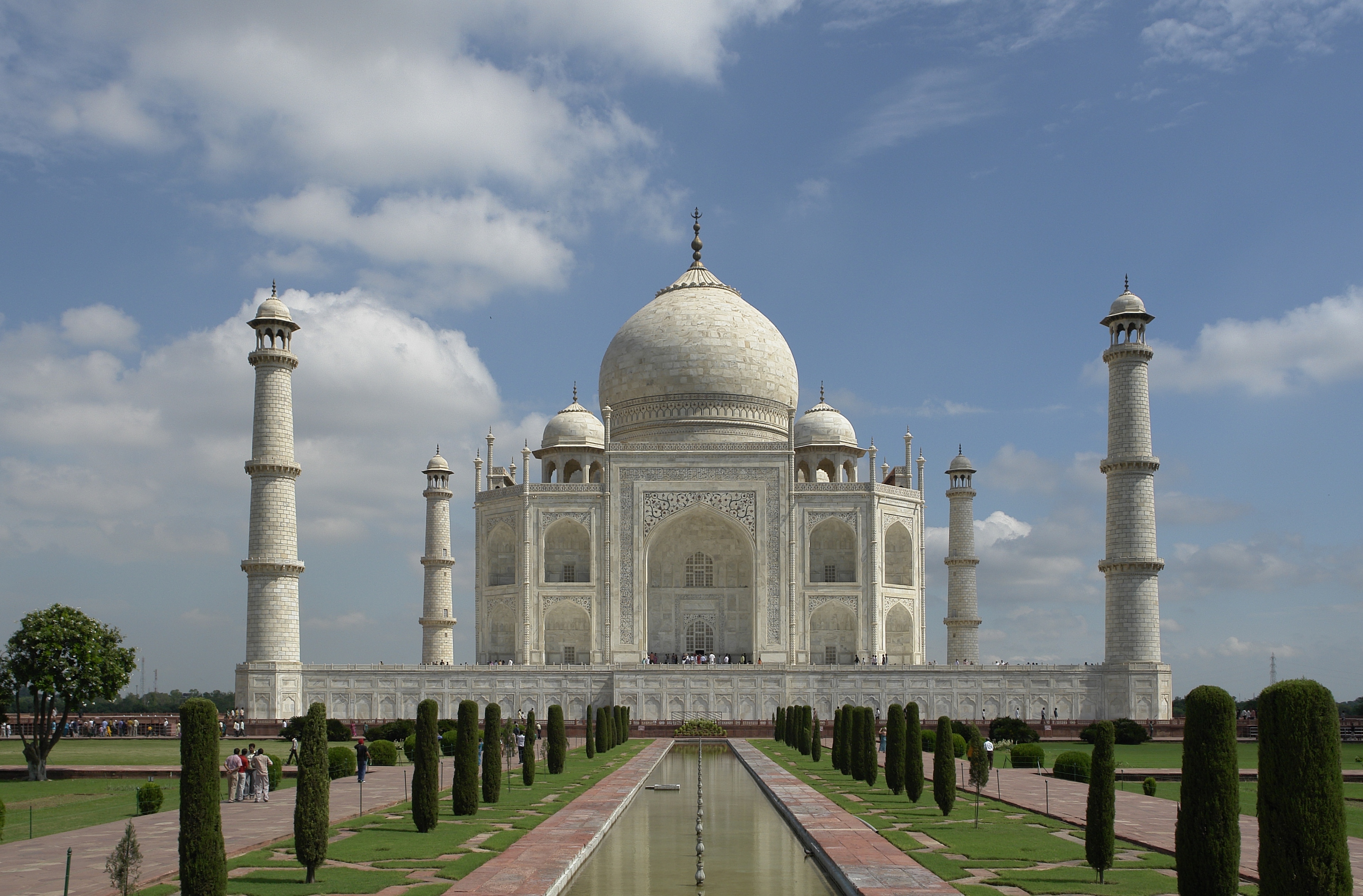
In 1631, Mumtaz Mahal, favorite wife of Mughal Emperor Shah Jahan, dies giving birth to their fourteenth child. The distraught sovereign decides to raise at Agra a mausoleum of impossible whiteness. From 1632 to 1653, twenty thousand artisans work under architect Ustad Ahmad Lahori's direction: white marble from Rajasthan, semi-precious stone inlays in pietra dura technique, quadrilateral gardens evoking Quranic paradise. The bulbous dome and minarets tilted outward compose a silhouette become emblem of India. Irony of fate: Shah Jahan, overthrown by his son Aurangzeb in 1658, will end his life imprisoned in Agra fort, contemplating his monument from a terrace.
The Taj Mahal rises on the Yamuna's right bank, facing a chahar bagh garden — four sections separated by canals symbolizing paradise rivers. Shah Jahan conceives the ensemble as funerary unity: the main mausoleum, a red sandstone mosque to the west, a replica to the east for balance, and monumental sandstone gates.
Ustad Ahmad Lahori, already active on Agra's Red Fort, coordinates specialists from Persia, Ottoman lands and Central Asia. Marble is transported on ox-drawn carts; inlays use lapis lazuli, carnelian, jasper, arranged in botanical patterns of precision.
The minarets, over forty meters tall, lean slightly outward: in case of earthquake, they would fall away from the central tomb. The double dome — decorative exterior, lower interior — amplifies acoustic resonance inside the burial chamber.
Aurangzeb, austere and warrior son, imprisons his father at Agra Fort. Shah Jahan spends eight years gazing at the distant Taj Mahal, until his death in 1666. He's buried at Mumtaz's feet, sole asymmetrical element in an edifice designed for geometric perfection — final gesture of an emperor who transformed his mourning into stone.