Culture
The Sea Monsters
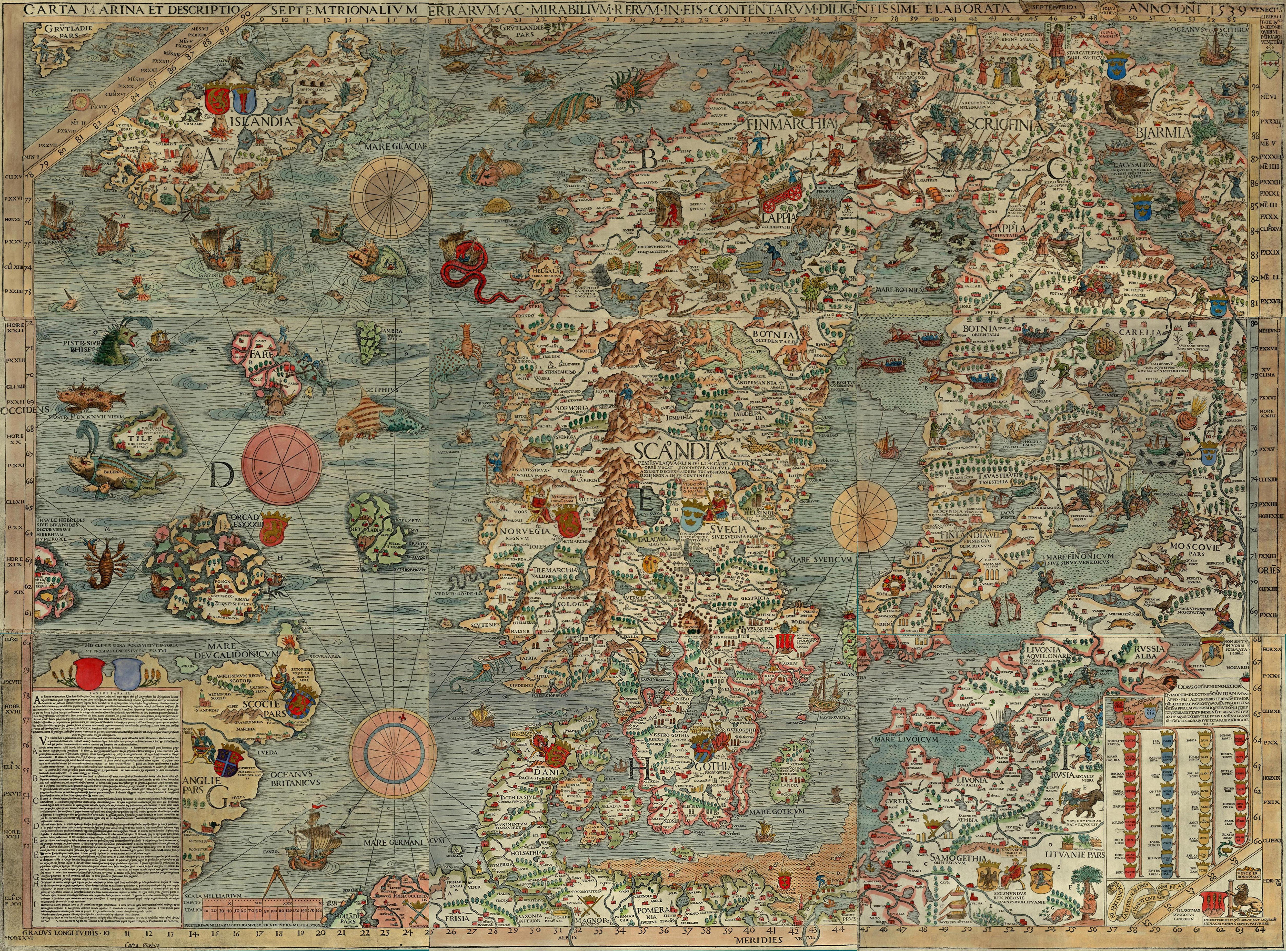
For centuries, unknown oceans were populated with gigantic creatures drawn directly on maps. These monsters weren't merely decorative. They often appeared in poorly explored zones, where information was still lacking. Ancient maps thus mixed navigation, sailors' tales, political prestige, and scholarly imagination. Some depicted whales as giant serpents capable of swallowing entire ships.
Sea monsters appear massively on European maps between the 15th and 17th centuries, when major maritime powers extended their commercial routes toward the Atlantic, Africa, and Asia. These maps weren't simple technical tools. They also served as diplomatic, scientific, and symbolic objects designed to show their sponsors' mastery of the world.
In still poorly documented zones, cartographers combined very different information: navigators' accounts, ancient texts, Nordic traditions, real observations of marine animals, and artistic imagination. A whale glimpsed in fog could become a colossal serpent. Walruses or giant squid were transformed into hybrid creatures occupying entire seas.
The famous Carta Marina created in 1539 by Olaus Magnus thus contains a multitude of fantastic animals distributed in northern seas. Some creatures also served as implicit warnings for navigators. Dangerous, little-explored zones or those subject to storms were often associated with threatening figures.
These illustrations also responded to aesthetic and political logic. A large richly decorated map demonstrated a kingdom's or patron's intellectual prestige. Monsters participated in this staging of knowledge. They recalled that the ocean remained a partially unknown space, where science, fear, and mythological narrative continued to coexist. As explorations progressed and hydrography became more precise in the 18th century, these creatures gradually disappeared from scientific maps. They then migrated toward decorative margins, then toward popular imagination.