Literature
Before the Internet
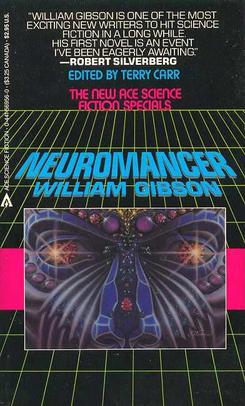
When Neuromancer appears in 1984, the web doesn't yet exist publicly. Yet William Gibson already describes computer hackers, artificial intelligences, megacorporations, and an immersive digital space called "cyberspace." The novel doesn't exactly predict our technological future, but it invents much of the visual and cultural imagination associated with the contemporary digital world.
Neuromancer is published in 1984 in a context where personal computing is only beginning to spread. Digital networks remain limited to academic, military, or specialized circles.
William Gibson nevertheless imagines a universe dominated by global information flows, technological multinationals, and identities fragmented between physical body and virtual space. The word "cyberspace" appears directly in the novel. Gibson describes it as an immersive visual matrix where data becomes a navigable environment.
This vision profoundly influences digital culture in subsequent decades. Cinema, video games, computer design, and discourse about the internet largely reuse the cyberpunk aesthetic developed by Gibson. The novel also distinguishes itself through its very dense urban materiality: neon, technological waste, body implants, and saturated industrial architectures. Unlike several more optimistic science fiction narratives, Neuromancer presents technology as an ambiguous system mixing fascination, dependence, and social fragmentation.
The book thus becomes less a precise prophecy than a cultural matrix. Many elements associated today with digital—hackers, virtual realities, autonomous AIs, global technological capitalism—take stable narrative form in this novel even before the arrival of the modern web.