Art
Michelangelo's Moses
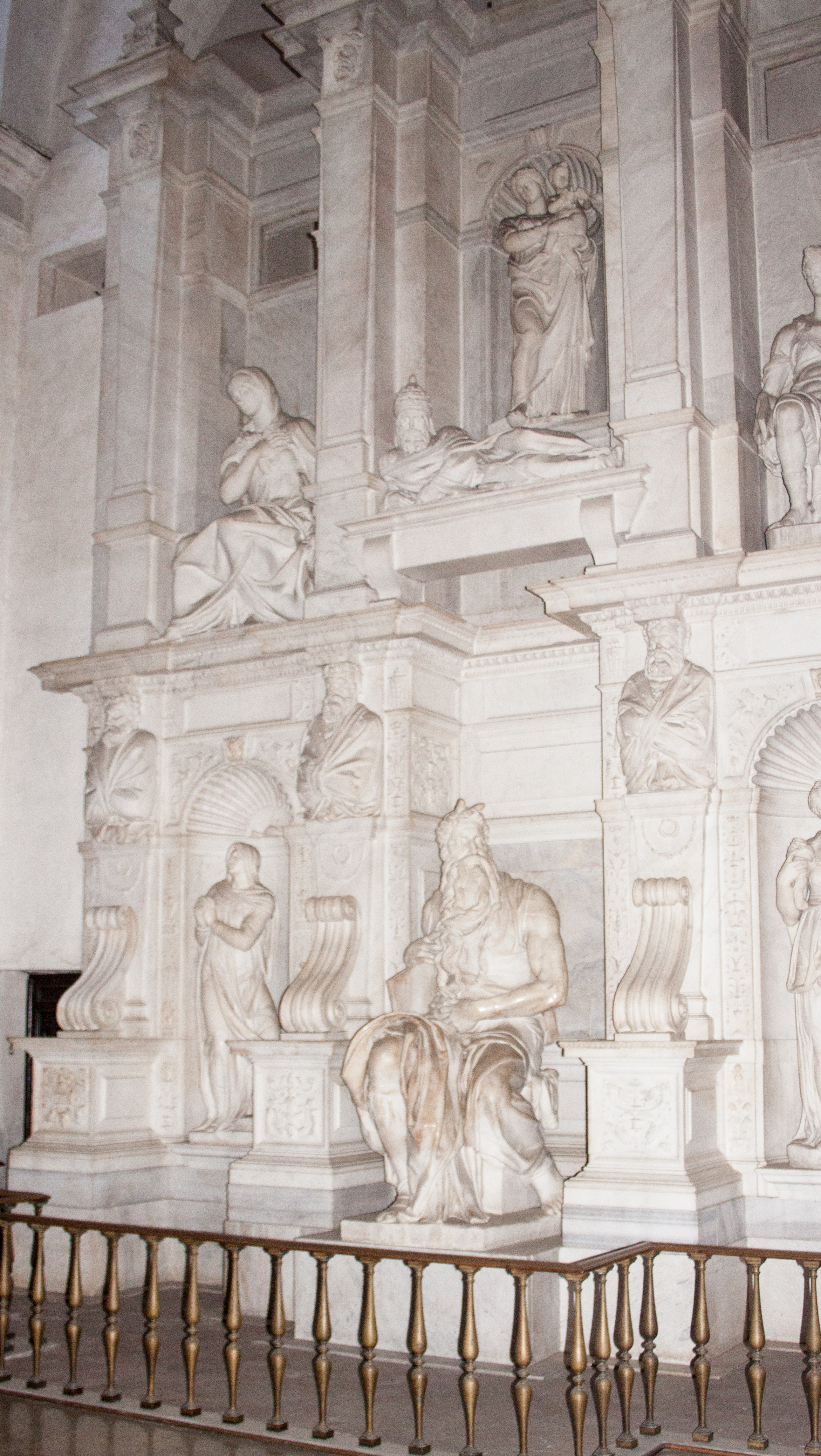
Sculpted between 1513 and 1515 for Pope Julius II's tomb, Michelangelo's Moses sits enthroned in the church of San Pietro in Vincoli in Rome. Seated, the tablets of the Law pressed against him, the prophet turns abruptly, muscles tense, beard swirling — frozen in divine anger that Freud would analyze as contained energy. The legendary horns on his head come from an ambiguous Latin translation of the Hebrew. The statue dominates a composition never completed in its planned monumental form.
Michelangelo devoted forty years, intermittently, to the papal tomb project: an architectural-sculptural work meant to rival ancient mausoleums. Only a fraction was realized. The Moses, central, is surrounded by reclining figures — Rachel and Leah — in theatrical staging. Sculpted between 1513 and 1515 for Pope Julius II's tomb, Michelangelo's Moses sits enthroned in the church of San Pietro in Vincoli in Rome.
The marble surface is worked with extreme precision: every lock of beard, every fold of the mantle seems to vibrate under the raking light of the Roman church. Vasari recounts that Michelangelo, struck by the Moses's vivacity, ordered him to speak — anecdote that sums up the reputation of an artist capable of breathing life into stone. Seated, the tablets of the Law pressed against him, the prophet turns abruptly, muscles tense, beard swirling — frozen in divine anger that Freud would analyze as contained energy.
The reduced tomb paradoxically becomes more famous than the initial project. The Moses embodies Renaissance sculpture as meditation on power, law, and frustration: even a papal genius cannot always impose his architectural vision on political and financial reality. The legendary horns on his head come from an ambiguous Latin translation of the Hebrew.