Art
The Vatican Pietà
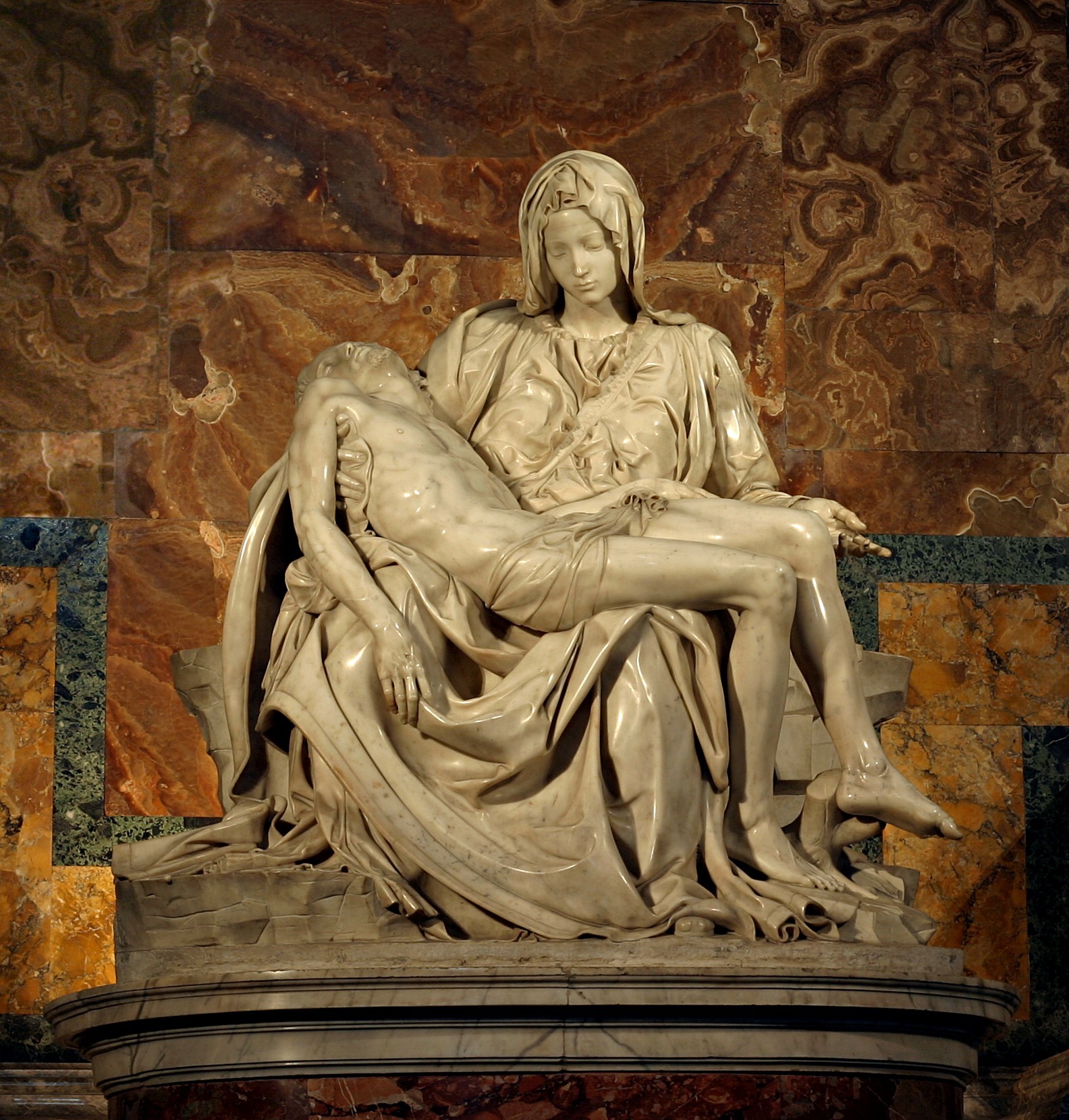
Completed in 1499 for the chapel of Jean de Villiers de la Groslaye at Saint Peter's, the Vatican Pietà is the only work signed by Michelangelo. The polished marble gives the bodies an almost impalpable softness: Mary holds the dead Christ on her knees, face young despite painful motherhood. The composed pyramid stabilizes the whole and guides the eye toward the collapsed face of the son. At twenty-four, Michelangelo creates a masterpiece that propels him onto the Roman scene.
Michelangelo chooses a Carrara marble of exceptional quality, without apparent veining, to obtain a continuous surface between drapery, skin, and limbs. The Virgin is deliberately larger than Christ so that the composition remains harmonious in frontal view — an iconographic license that contemporaries accept without difficulty. Completed in 1499 for the chapel of Jean de Villiers de la Groslaye at Saint Peter's, the Vatican Pietà is the only work signed by Michelangelo.
The work is now protected by bulletproof glass after a visitor struck it with a hammer in 1972, breaking the Virgin's nose and arm. The meticulous restoration leaves barely visible traces, but transforms the public's relationship to the sculpture: admiration at a distance, almost surveilled veneration. The polished marble gives the bodies an almost impalpable softness: Mary holds the dead Christ on her knees, face young despite painful motherhood.
Transferred to Saint Peter's Basilica in the eighteenth century, the Pietà becomes one of Rome's obligatory stops. Its contained emotion — no Baroque theatricality, no blood, no cries — inaugurates a Renaissance sensibility where pain is expressed through geometry as much as expression. The composed pyramid stabilizes the whole and guides the eye toward the collapsed face of the son.