Literature
The Round Library
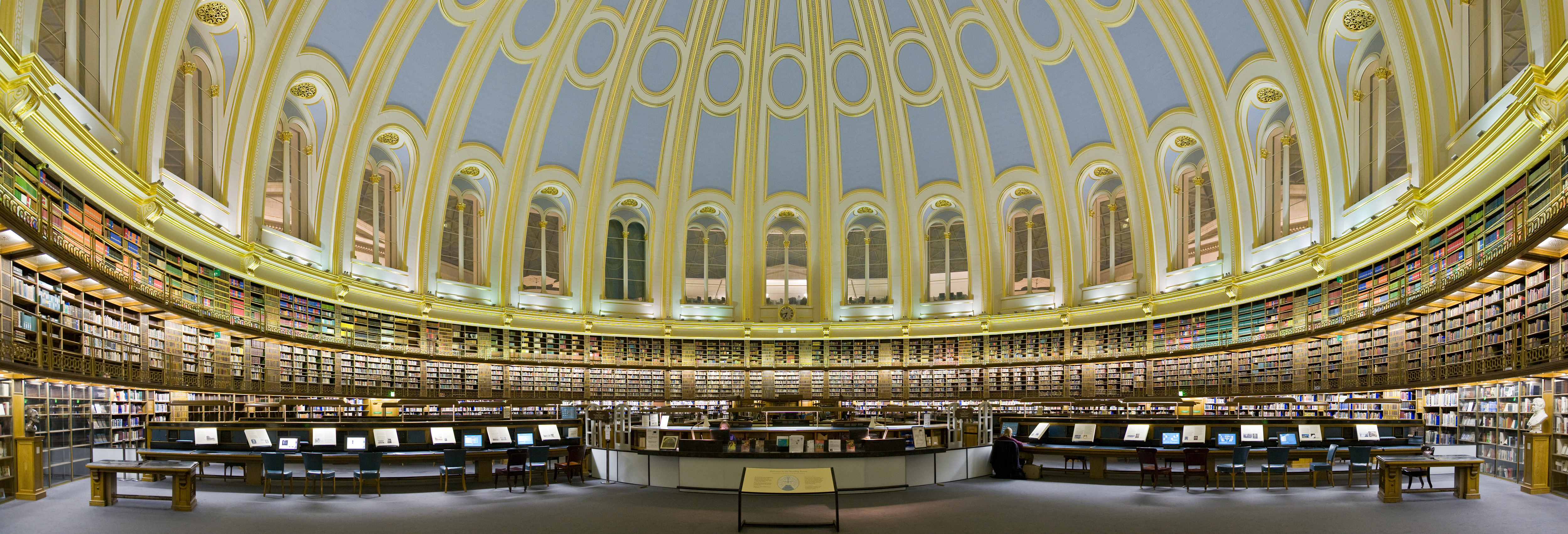
The great reading room of the British Museum, opened in 1857, was not only spectacular: it physically organized knowledge as a circular universe. Under its immense dome, readers were placed at the center of a device where catalogs, surveillance, silence, and architecture converged. Some saw in it a rational temple; others, an almost intimidating machine.
The British Museum Reading Room is designed in the mid-19th century by Sydney Smirke, with a circular structure installed in the museum's inner courtyard. When it opens in 1857, it is among the most impressive reading rooms in Europe.
Its plan is not trivial. The circle organizes readers around an administrative and symbolic center. Catalogs, desks, book requests, and surveillance are distributed according to an almost panoptic logic, but applied to knowledge rather than prison.
The dome gives the space a monumental dimension. Reading becomes an activity placed under totalizing architecture, both protective and overwhelming. The individual reader finds himself enveloped in a geometry that suggests knowledge's universality. The room attracts major figures: Karl Marx, Virginia Woolf, Bram Stoker, Arthur Conan Doyle, or George Bernard Shaw work there at different periods. It becomes a place of intellectual production as much as a consultation instrument.
But its organization also imposes discipline. Knowledge is not freely accessible on open shelves; it passes through catalogs, slips, and employees. The circular library thus gives a paradoxical image of scholarly modernity: immense intellectual openness, but mediated by a very strict administrative system.