Art
The Coal Ceiling
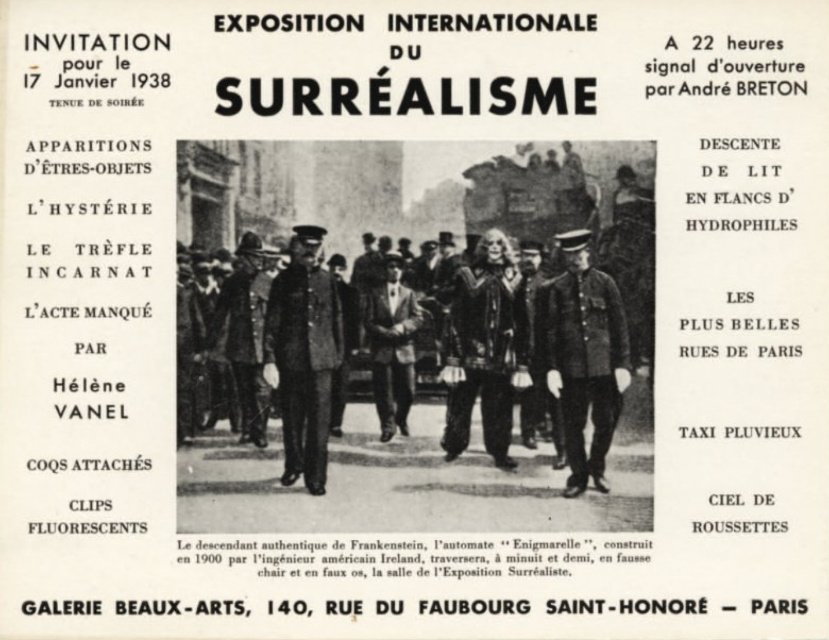
At the 1938 International Surrealist Exhibition in Paris, visitors entered deliberately dark rooms where over a thousand coal bags were suspended from the ceiling. The space resembled less a classic gallery than an unstable, almost subterranean set. The Surrealists wanted to transform the entire exhibition into a psychological experience rather than simple artwork presentation.
The International Surrealist Exhibition opened in 1938 at the Galerie des Beaux-Arts in Paris under André Breton and Paul Éluard's organization.
The artists rejected the classic luminous museum model where paintings are simply hung on neutral walls. Instead, they transformed the entire space into an immersive and destabilizing environment. Marcel Duchamp suspended approximately 1200 coal bags from the ceiling, giving the impression the room could collapse at any moment. Lighting remained deliberately low and several visitors used flashlights to circulate.
Dead leaves covered certain floor areas while smells and strange objects participated in the atmosphere. Works were no longer separated from their environment; they became elements of an almost theatrical experience. This scenography perfectly corresponded to Surrealist ambitions. The movement sought to disturb perceptual habits and bring art closer to dream, unconscious, and free mental association.
The exhibition also marks an important moment in modern museum design history. It influenced several future forms of immersive installations and experimental exhibitions. The coal bags remain the event's most famous image: a banal industrial material transformed into a threat suspended above elegant prewar Paris visitors.