Art
The Misunderstood Tempest
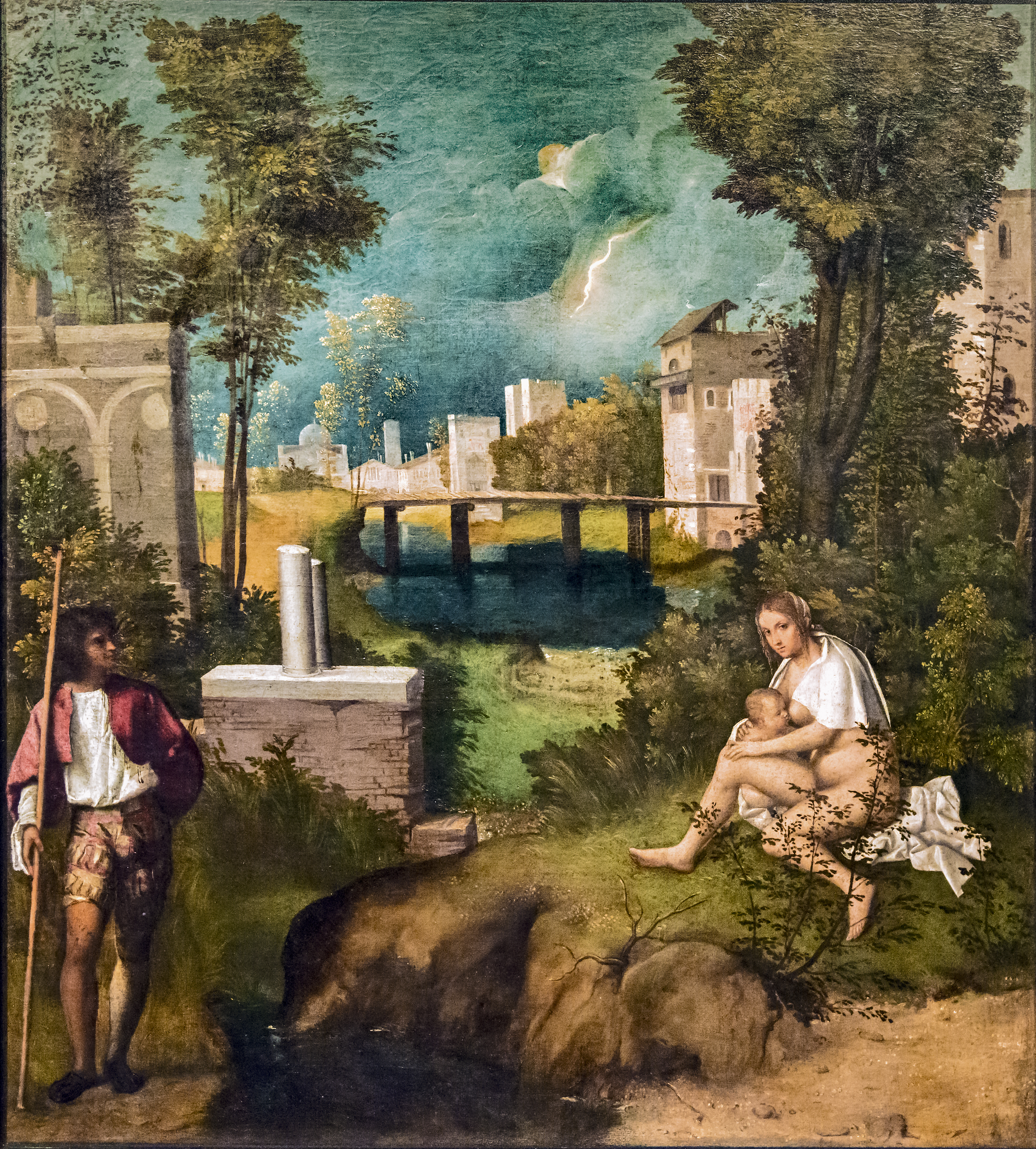
For more than five centuries, no one knows exactly what Giorgione's The Tempest represents. A woman nursing a child, a standing man, ruins, lightning, and a silent city compose a strangely calm scene despite imminent danger. The painting seems to tell a precise story while continuously refusing to be clearly interpreted.
Painted around 1508, The Tempest is one of the most mysterious paintings of the Italian Renaissance. Giorgione constructs a seemingly narrative scene without providing any element allowing definitive stabilization of its meaning.
A semi-nude woman nurses a child in the foreground. On the left, a young man seems to observe the scene without really interacting with her. Behind them appear a bridge, ruins, and a sky crossed by lightning. For centuries, historians and critics have proposed contradictory interpretations: biblical scene, ancient myth, political allegory, or simple visual poetry without precise narrative.
This uncertainty is probably voluntary. Giorgione belongs to a moment when Venetian painting begins privileging atmosphere, light, and emotional ambiguity rather than entirely explicit symbolism.
The landscape plays an unusual role here. The storm isn't simple decor; it produces a diffuse tension that traverses the entire composition. Humid light, deep greens, and silences between characters create an almost cinematic impression. The Tempest remains fascinating precisely because it resists explanation. The painting constantly gives the impression that an important meaning exists, but remains slightly out of reach.