Art
The Impossible Pipe
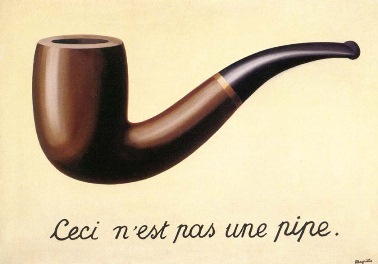
Magritte speaks of "treachery" because images deceive us without saying so: one ends up confusing representation and the real thing. Under a very realistic pipe, the painting displays "This is not a pipe"—one can neither fill nor smoke it, it's only paint.
Painted in 1929, The Treachery of Images belongs to the period when René Magritte develops his most systematic investigations into language and visual representation.
The painting shows a pipe painted with extremely sober realism accompanied by the phrase "This is not a pipe." Several spectators immediately interpret the work as a paradoxical provocation. Magritte nevertheless recalls an often forgotten obviousness: the image of a pipe is not the real object itself. One can neither fill nor smoke it. The painting thus reveals the fundamental difference between representation, language, and material reality.
The artist seeks less to produce a classic surrealist illusion than to disturb mental automatisms spontaneously connecting words, objects, and images. This approach profoundly influences philosophy, semiotics, and image theory in the 20th century. Michel Foucault will even devote an entire essay to Magritte's work.
The painting's apparent simplicity also explains its lasting power. With very few elements, Magritte manages to transform a banal object into an intellectual problem about the very nature of visual representation.