Culture
The First Modern Factory
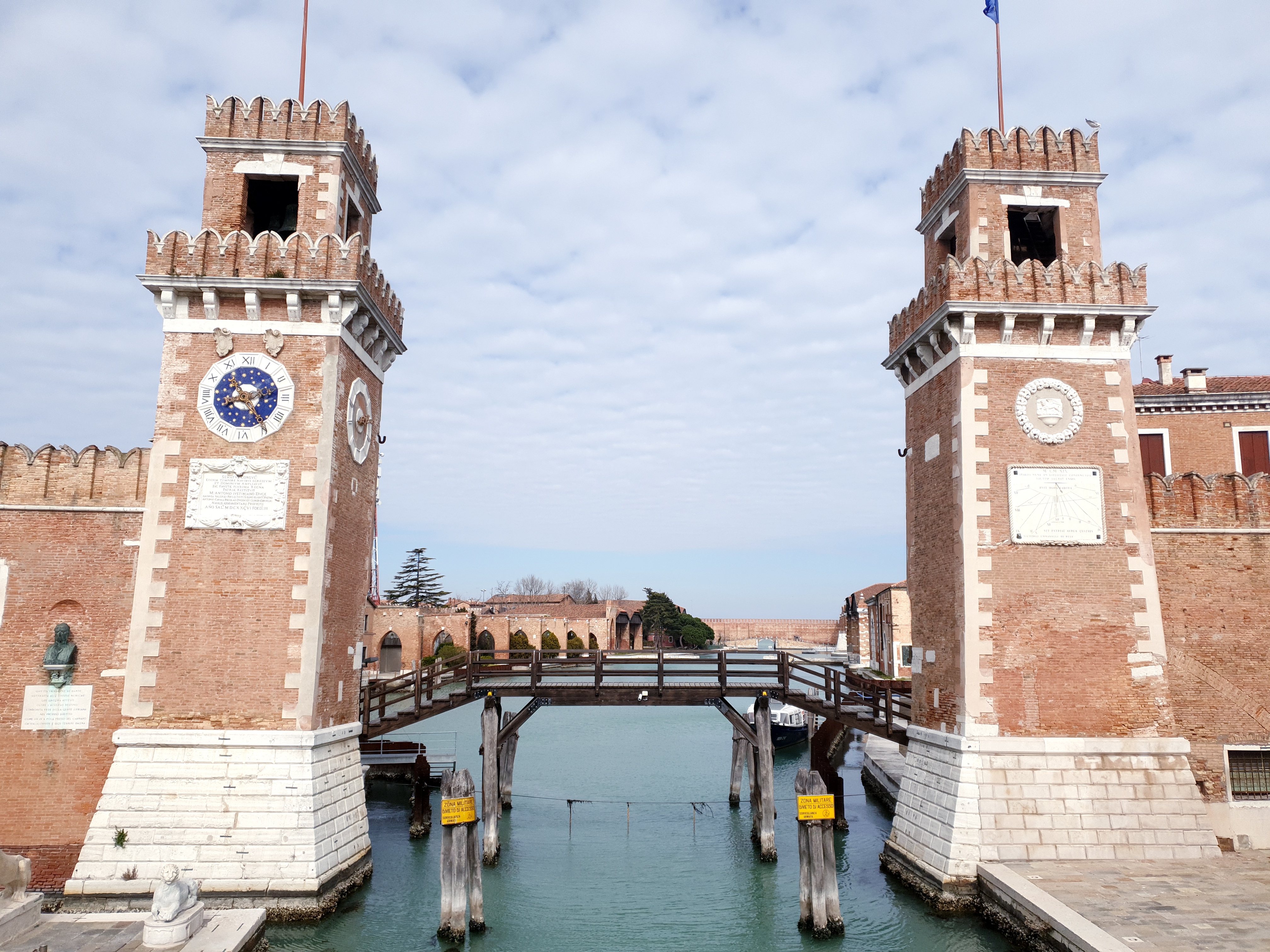
In the Middle Ages, Venice was already building ships almost assembly-line style. Its arsenal so impressed foreign visitors it sometimes resembled an early vision of the industrial revolution.
From the 13th century, the Republic of Venice developed an immense naval complex, the Arsenal, which quickly became one of Europe's largest industrial centers. The city's power resting on maritime commerce, it had to produce ships quickly and in quantity to protect its routes and fleet.
To achieve this, the Arsenal implemented work organization very advanced for its time: galley parts were manufactured in specialized workshops before being assembled according to a largely standardized process. Some travelers even describe hulls sliding along internal canals while workers successively added rigging, weapons, and sails—an image doubtless exaggerated, but revealing of the site's effect.
The complex employed several thousand workers—carpenters, blacksmiths, ropemakers, founders—and Venice kept control of its techniques, protecting certain know-how as state secrets. The Arsenal thus recalls that industrialization didn't suddenly emerge in the 19th century: long before modern factories, cities already knew how to organize massive, specialized, and tightly controlled production, and behind Venice's palaces functioned a genuine machine serving a global maritime power.