Art
Vermeer's Silence
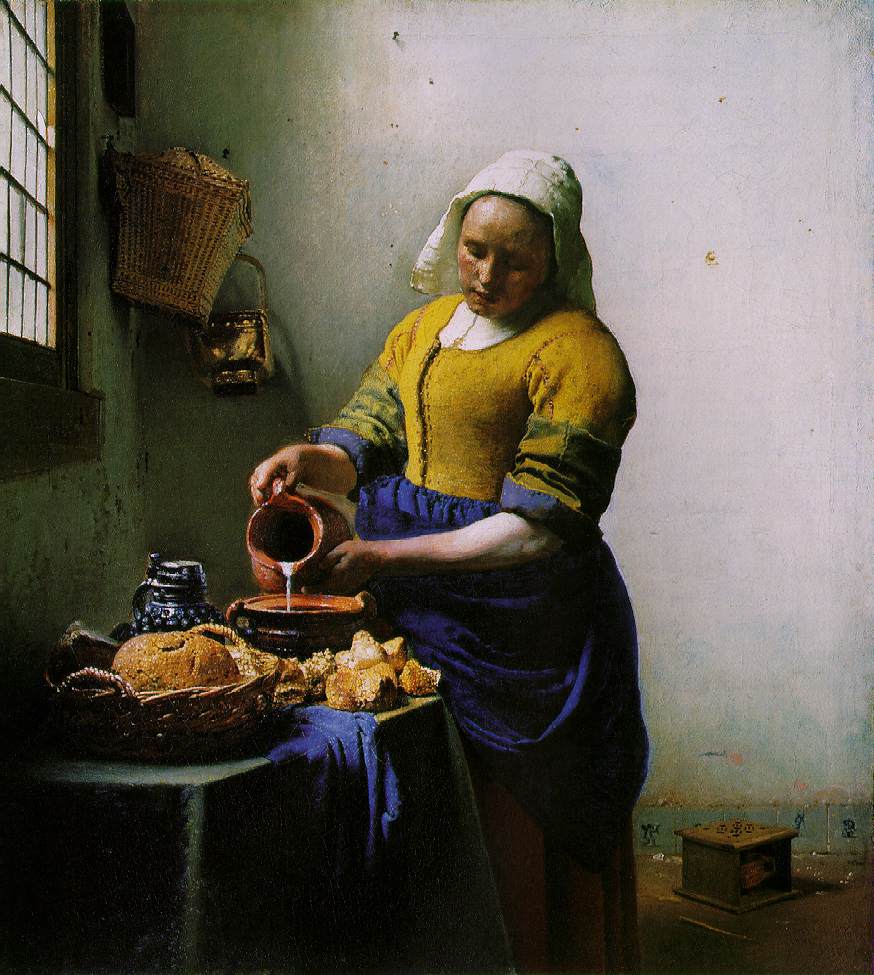
Vermeer's figures often seem suspended in an almost unreal silence. A woman reads a letter, another pours milk, a third looks out the window. Yet this impression does not come only from the depicted subjects. It also rests on extremely precise technical choices related to light, interior space, and the way the painter controlled visible details.
Johannes Vermeer left only about thirty attributed works with certainty, but many share the same quality of calm that owes almost nothing to the domestic subject: it is born from an extremely controlled visual construction. The action is most often reduced to a slow and precise gesture—reading, writing, pouring, looking—and the figures, absorbed in a silent activity, never turn toward the spectator to seek their attention.
The light does the rest. Vermeer brings it in almost always through a single lateral window, which softens passages between clarity and shadow and banishes the theatrical contrasts of a Caravaggio. Several researchers think he used an optical device close to the camera obscura: one finds in his canvases those slightly blurred halos and this hierarchy of detail, where certain zones are of cutting sharpness while others remain vaporous.
The interiors prolong this silence, with their almost bare walls, carefully spaced objects, and compositions of geometric stability that let the gaze circulate smoothly. Yet this rest has nothing spontaneous: under several paintings, analyses reveal important pentimenti, Vermeer gradually erasing superfluous elements to obtain a purified image, as if suspended outside time.