Culture
The Burnt Fake Cities
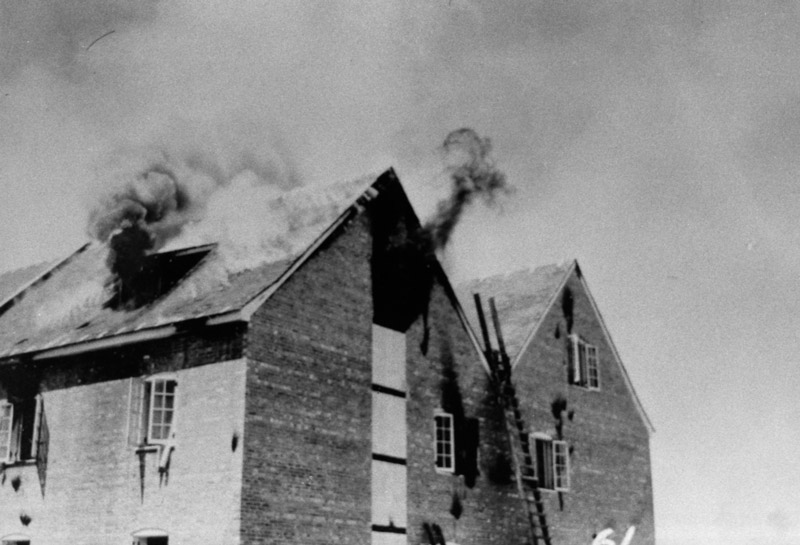
During World War II, the United States builds entire residential neighborhoods solely to burn them. These miniature cities serve to test bombing effectiveness and understand how fire spreads in modern houses. Furniture, curtains, kitchens, and bedrooms are reproduced with precision to create conditions as realistic as possible.
From the 1940s onward, the American army develops several experimental sites designed to study incendiary bombing effects on cities.
Complete houses are built specifically to be destroyed. They don't serve to house inhabitants but to produce data: flame propagation, material resistance, heat circulation, and collapse speed.
Researchers collaborate with architects, engineers, and decorators to recreate credible interiors. Buildings sometimes contain furniture, clothing, dishes, and everyday objects. An important part of this research concerns urban fires observed in Europe and Japan. Military strategists seek to understand how certain architectural forms favor or slow firestorms.
Experiments notably reveal the crucial role of ventilation, synthetic materials, and open structures in fire propagation. These fake cities today possess a particular strangeness. They resemble abandoned film sets, designed solely to simulate destruction of modern daily life. Architecture there becomes an experimental military object. The house is no longer a refuge but a structure analyzed according to its combustibility, ventilation, and behavior facing industrial weapons.