Culture
The Illegible Manuscript
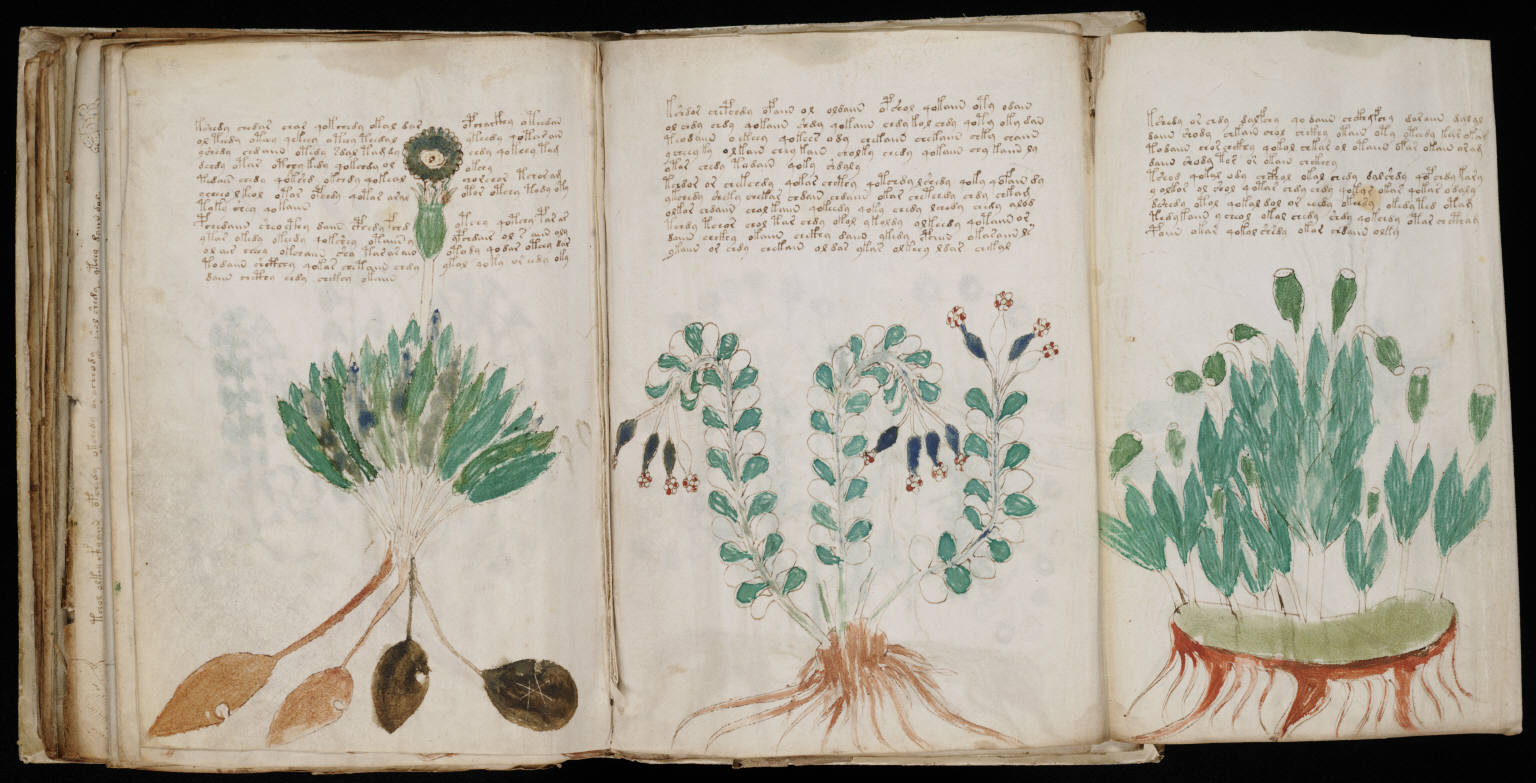
The Voynich Manuscript resembles a scientific book from a parallel world. Its pages show impossible plants, strange astronomical diagrams, women immersed in organic structures, and above all a writing that no researcher has succeeded in deciphering with certainty. For over a century, cryptographers, linguists, and historians have attempted to understand this book without knowing if it really contains a language or an extraordinarily sophisticated illusion.
The Voynich Manuscript appeared publicly in the early 20th century when it was acquired by bookseller Wilfrid Voynich. However, carbon-14 analyses place its fabrication in the 15th century, probably in Central Europe.
The book contains several hundred illustrated pages divided into apparently thematic sections: botany, astronomy, pharmacology, or biological diagrams. Yet none of the represented plants exactly corresponds to known species. The text itself constitutes the main mystery. The characters seem to follow real linguistic regularities: certain structures repeat, words possess coherent statistical distributions, and syntax appears organized.
Encryption specialists, including military cryptographers, have attempted to decode it without success. Some think it's a real coded language; others envision an artificial language, a mnemonic system, or even a skillfully constructed mystification. The absence of visible errors particularly intrigues researchers. Producing such a long text with internal statistical coherence would have demanded considerable work.
The manuscript also fascinates through its aesthetic. The drawings seem familiar while remaining slightly impossible, as if the book belonged to an alternative scientific tradition. Even today, the Voynich remains one of the rare great historical manuscripts whose contents no one really understands.