Art
Before the Cleaning
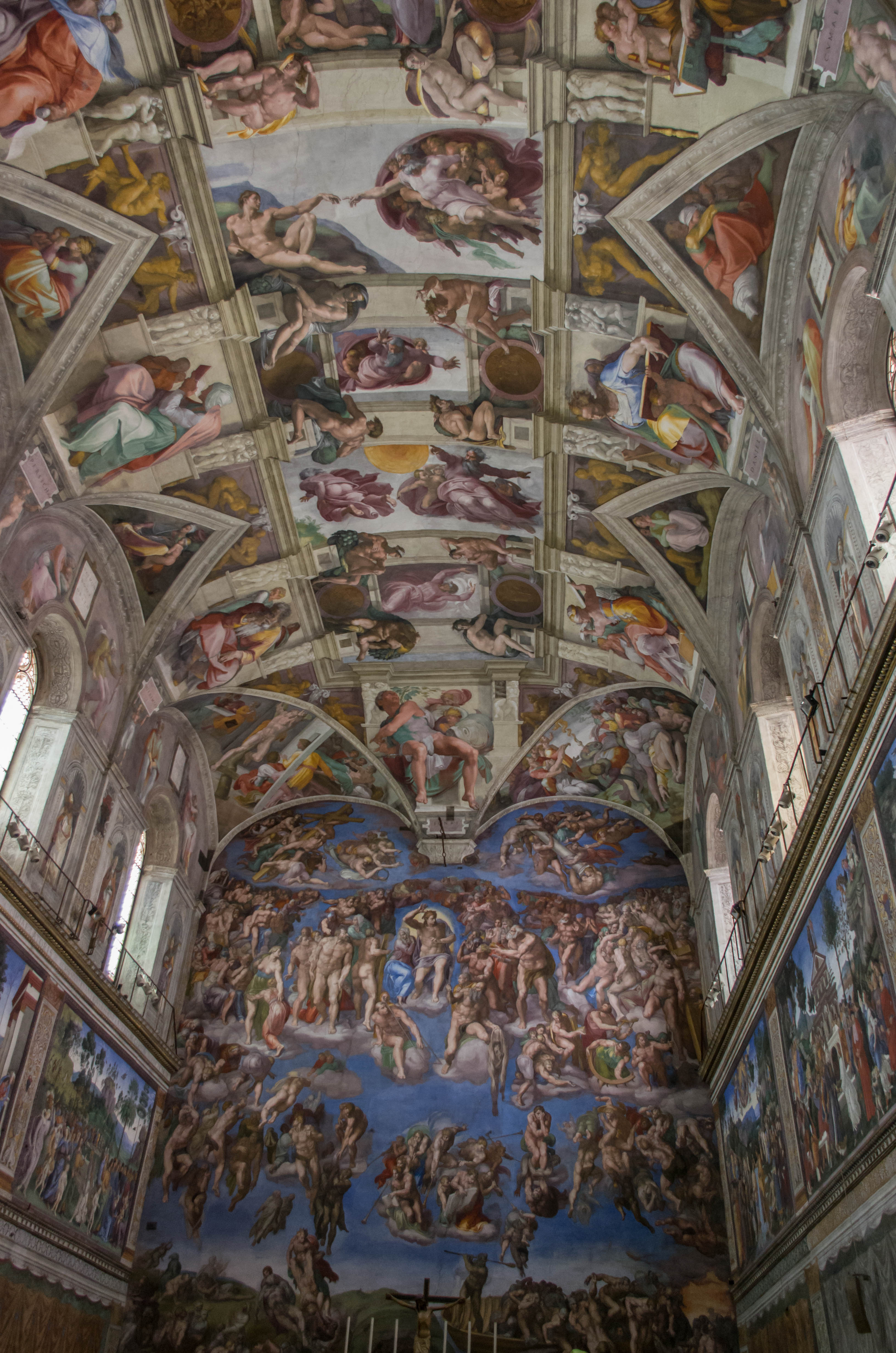
Before its 20th-century restoration, the Sistine Chapel ceiling appeared much darker than the one visible today. For centuries, candle smoke, dust, and oxidized varnishes had gradually modified Michelangelo's colors. When restorers began cleaning certain areas, many were surprised by the almost violent intensity of the original hues.
Michelangelo paints the Sistine Chapel ceiling between 1508 and 1512 using primarily the fresco technique. Pigments are applied directly to wet plaster, producing particularly durable colors.
But over the centuries, the work's appearance changes profoundly. Candles used during religious ceremonies gradually deposit soot on surfaces. Varnishes and old restorations also alter tonalities.
In the 20th century, several specialists then consider the dark colors as part of Michelangelo's original style. When the major restoration begins in the 1980s, the first cleaned areas provoke a visual shock. Under the blackened layers appear extremely luminous blues, pinks, greens, and oranges.
The project immediately triggers strong controversies. Some historians think the restorers removed glazes deliberately added by Michelangelo to model certain shadows. Others consider, on the contrary, that the cleaning finally reveals the authentic chromatic intensity of the fresco. This restoration profoundly transforms the modern perception of the artist. The dark and sculptural Michelangelo imagined for centuries gives way to a much more colorful and experimental painting than expected.