Culture
The Year Without a Summer
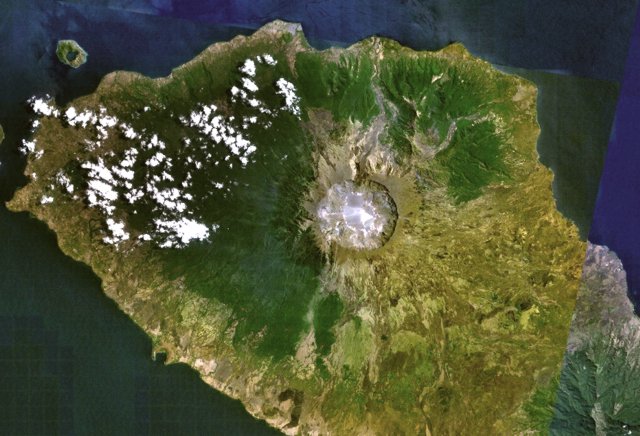
In 1815, Mount Tambora's eruption in Indonesia projected so much ash into the atmosphere that global climate changed for months. The following year, Europe experienced a glacial summer, catastrophic harvests, and famines. Even the sky took strange colors visible in several 19th-century paintings.
On April 10, 1815, Mount Tambora erupted on Sumbawa island, Indonesia, with such violence the detonation was heard over two thousand kilometers away. Immense ash columns rose into the atmosphere and entire villages disappeared under projections: it's one of modern history's most powerful eruptions. But the essential occurred far from Indonesia, because particles propelled very high filtered part of sunlight on a global scale.
1816 then entered memories as "the year without a summer." In Europe and North America, temperatures collapsed, it still snowed in June in places, harvests were destroyed, prices soared, and famine reappeared. Bewildered, contemporaries didn't understand these disruptions, while the sky sometimes tinged orange-red at sunset—spectacular twilights some historians believe they find in Turner's landscapes.
The disrupted climate also weighed, indirectly, on culture. It was during this cold, rainy summer that several British writers, stuck in a villa near Lake Geneva, challenged each other to write frightening stories, and that Mary Shelley began imagining Frankenstein.
Tambora recalls that a local natural event can disrupt planetary climate, which is why scientists still study it to measure giant eruptions' impact. An isolated Indonesian mountain thus modified several years of global weather, and perhaps influenced part of European artistic history.