Art
Kubrick's Candles
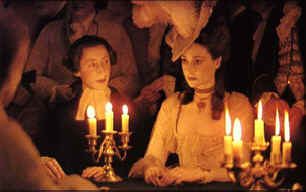
To film certain scenes of Barry Lyndon, Stanley Kubrick refused classic cinema artificial lighting. He wanted to recover the real light of 18th-century interiors: unstable flames, soft shadows, and warm penumbra. The problem was that no standard camera could then correctly record such dark images. The solution would come from lenses originally designed for NASA and space exploration.
In preparing Barry Lyndon in the early 1970s, Stanley Kubrick wanted to recover on screen the appearance of European 18th-century paintings, and notably to film nocturnal scenes by the sole light of the era: candles, tapers, fireplace fires. The technical obstacle was considerable, for the films of that time normally required much more light, which constrained classic productions to heavy lighting devices to simulate night.
Kubrick refused this compromise. He obtained rare Zeiss lenses originally designed to photograph the Moon's far side during Apollo missions, equipped with an exceptional f/0.7 aperture capable of capturing minimal lights. The cameras had to be profoundly transformed to accommodate them, at the price of a minuscule depth of field and very difficult camera work.
The obtained image resembled no previous historical film: flames projected moving shadows, backgrounds dissolved into black, and faces seemed to slowly emerge from darkness. Kubrick directly drew inspiration from Gainsborough, Watteau, or Georges de La Tour, sometimes recomposing the luminous structure of old paintings.
This obstinacy made Barry Lyndon a reference for directors of photography, showing that an extreme technical constraint can become an aesthetic parti pris, capable of profoundly modifying our perception of an era.