Art
Goya's Nightmares
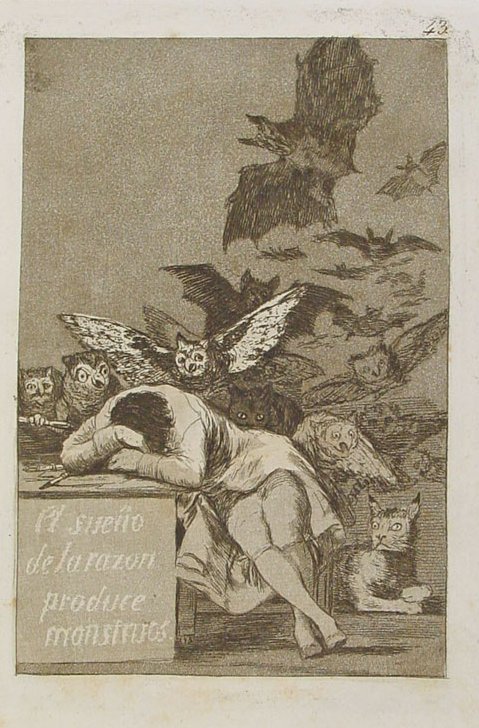
In Los Caprichos, published in 1799, Goya fills his images with witches, learned donkeys, distorted faces, and nocturnal creatures. The most famous board shows a sleeping man while monsters pop up behind him. The drawing is not only fantastic: it sums up a concern of the Enlightenment, that of a reason capable of producing its own nightmares.
Francisco de Goya published Los Caprichos in 1799, in the form of a series of satirical engravings. Spain then went through a period of deep intellectual tensions, between the legacy of the Enlightenment, religious conservatism and political anxieties.Plate 43, El sueño de la razón produce monstruos, has become one of the most commented images in the history of art. It shows a character slumped on a table, surrounded by owls, bats and creatures emerging from the darkness.The Spanish sentence can be read in several ways. The sleep of reason begets monsters; but the dream of reason can also produce monsters. Ambiguity is essential. Goya doesn't just celebrate rationality over superstition. It also shows that imagination, when it escapes all control, invades mental space.Caprichos criticize forced marriages, ignorance, corruption, gullibility and social violence. Monsters do not come from another world; they are born from human structures themselves. Goya uses aquatint to produce velvety, almost psychological shadows. The technique makes it possible to give the images an unstable atmosphere, between caricature and hallucination. These engravings announce a dark modernity: the artist no longer illustratesonly the visible world, it maps the mental distortions of an entire society.