Law & society
The prison that sees everything
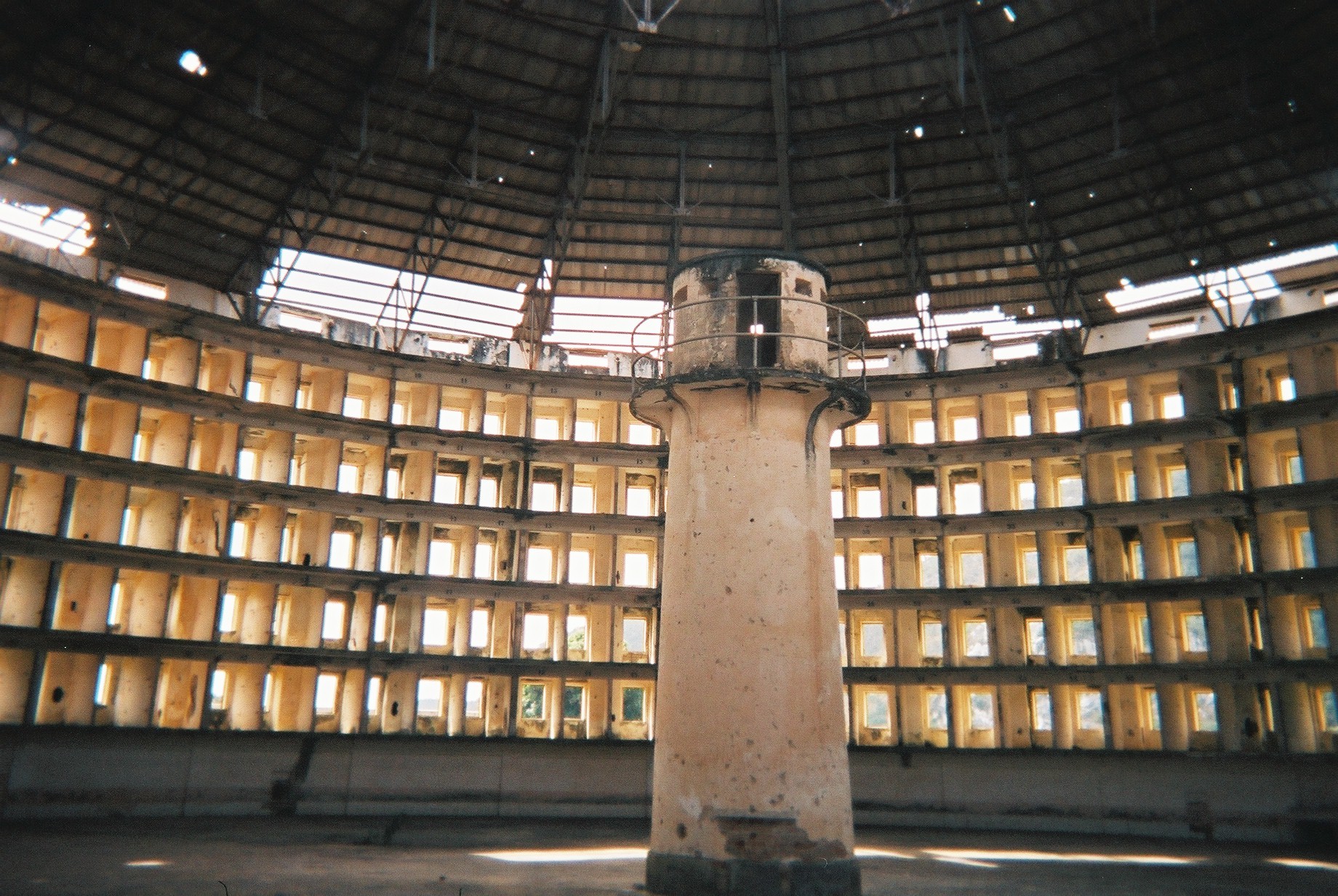
In 1791, philosopher Jeremy Bentham designed the panopticon: a ring of cells around a central tower from which a single guard could watch every inmate without being seen. The principle is less architectural than psychological: because the prisoner never knows if they are being observed at a given moment, they must always behave as if they were. Surveillance is internalized — the inmate disciplines themselves.
Few pure panopticons were built, but the model inspired many prisons. Presidio Modelo, erected in Cuba in the 1920s, is among the most spectacular examples: huge rotundas of cells opening onto a single guard tower.
In 1975, in Discipline and Punish, Michel Foucault made the panopticon a metaphor for modern societies — schools, factories, hospitals operating through diffuse surveillance. The device escapes the prison to describe a general form of power: seeing without being seen, encouraging obedience through uncertainty rather than constant force.