Art
Pruitt-Igoe Collapses
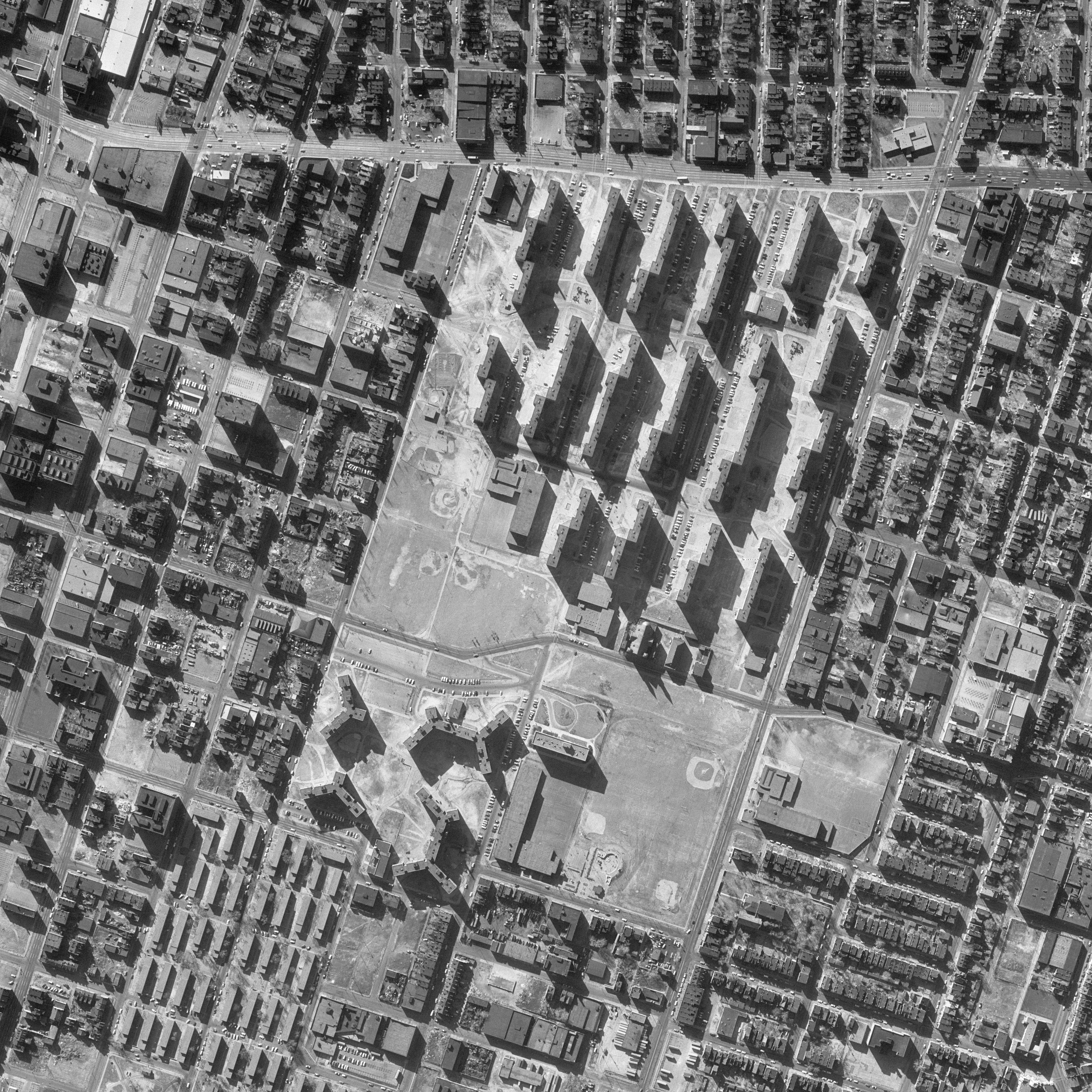
In 1972, the Pruitt-Igoe towers in Saint Louis were dynamited less than twenty years after their construction—a resounding symbol of large housing project failure in the United States. The implosion images would lead Charles Jencks to say that modernist architecture died that day, even though the social and political reality was more complex.
Inaugurated in 1954-1956, Pruitt-Igoe's fourteen blocks were meant to offer modern and airy housing to African-American families in Saint Louis, in a context of urban segregation and middle-class flight to the periphery. Designed by Minoru Yamasaki—future architect of the Twin Towers—according to CIAM principles, they applied "streets in the air," vertical spaces, circulation separation. Rapidly, underfunding, vacancy, vandalism, insecurity, and municipal negligence transformed the complex into a symbol of decay.
In 1972, the municipality decided to demolish three of the most degraded blocks; the implosion images, filmed and broadcast, went around the world. Charles Jencks would see the "death of modernist architecture"—a seductive but simplistic formula. Pruitt-Igoe didn't fail only because concrete was ugly: it failed because American social housing was undermaintained, because jobs left, because racial segregation concentrated poverty, because urbanistic promises weren't funded long-term.
The implosion became a metaphor-image used against all postwar social architecture—sometimes in favor of liberal policies that abandoned public housing. Understanding Pruitt-Igoe means separating the building from its political context: were the towers a bad type, or a good type poorly managed? The question remains open—but the image of smoking ruins decided in the imagination before historians.