Architecture
Saint Peter's Basilica
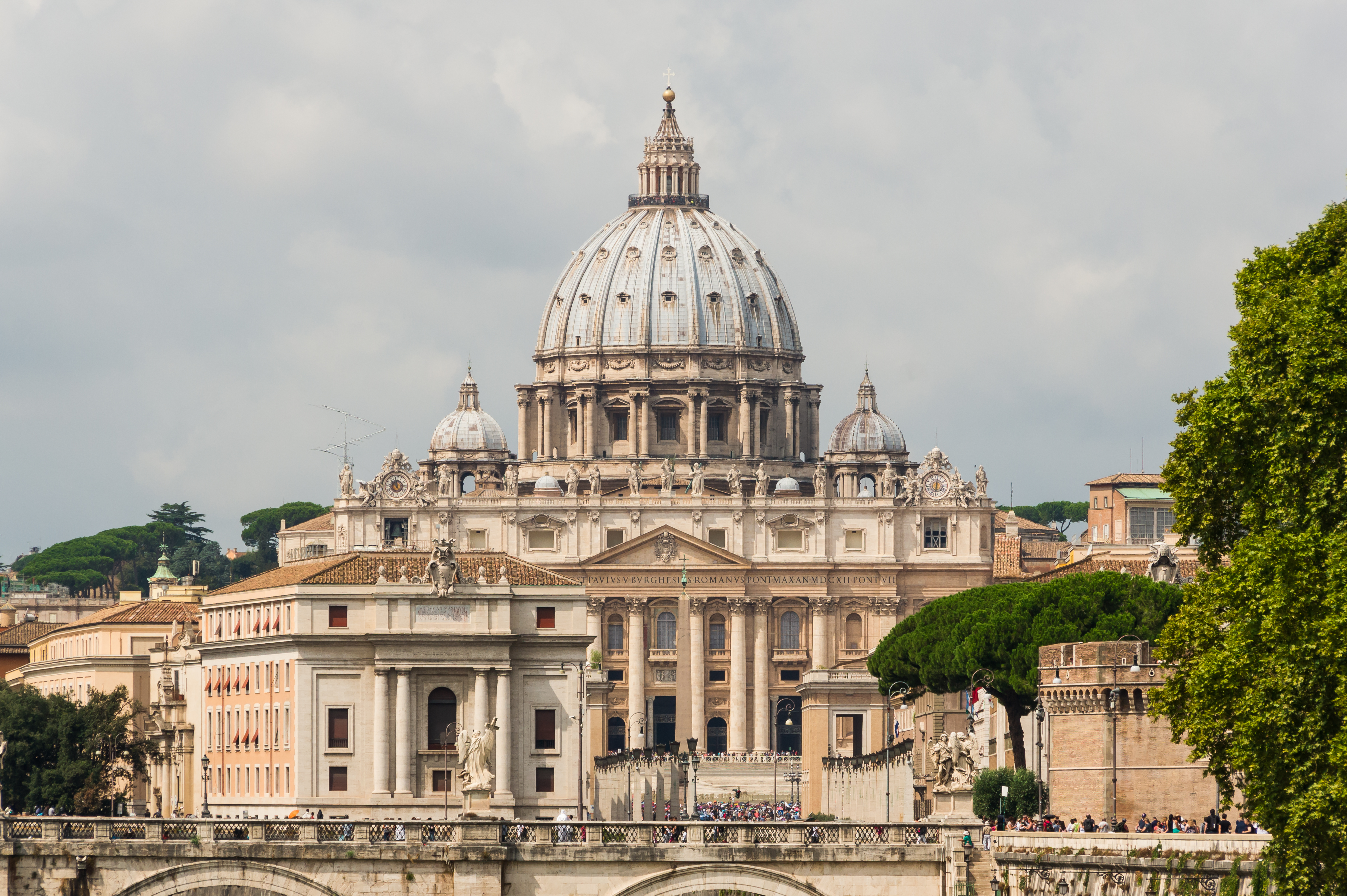
The reconstruction of Saint Peter's Basilica at the Vatican extends from 1506 to 1626, under a succession of architects — Bramante, Raphael, Michelangelo, Maderno — each modifying his predecessors' project. Michelangelo's dome dominates Rome like a giant sphere set on a colossal crossing. The basilica replaces a paleochristian edifice where, according to tradition, Saint Peter rests. It becomes the spatial center of Catholicism and the most costly laboratory of Renaissance and Baroque architecture.
Julius II decides in 1506 to demolish the old basilica to erect a monument befitting triumphant papacy. Bramante first proposes a central plan, inspired by the Pantheon. After his death, Raphael, Fra Giocondo and others adapt the scheme; Michelangelo, from 1547, simplifies the project and concentrates his energy on the dome, completed after his death by Giacomo della Porta. The reconstruction of Saint Peter's Basilica at the Vatican extends from 1506 to 1626, under a succession of architects — Bramante, Raphael, Michelangelo, Maderno — each modifying his predecessors' project.
Maderno's façade, added in 1612, lengthens the nave and transforms the original appearance into a processional toward Saint Peter's Square traced later by Bernini. Inside, Michelangelo's Pietà, Bernini's baldachin, and light filtered through lateral cupolas compose a route where art and liturgy merge. Michelangelo's dome dominates Rome like a giant sphere set on a colossal crossing.
The construction mobilizes entire quarries, Carrara marbles, carpenters and lifting engineers. Its cost and duration symbolize a Church reinventing itself visually at the very moment when the Reformation contests its authority. The basilica replaces a paleochristian edifice where, according to tradition, Saint Peter rests.