Art
Goya's Wall
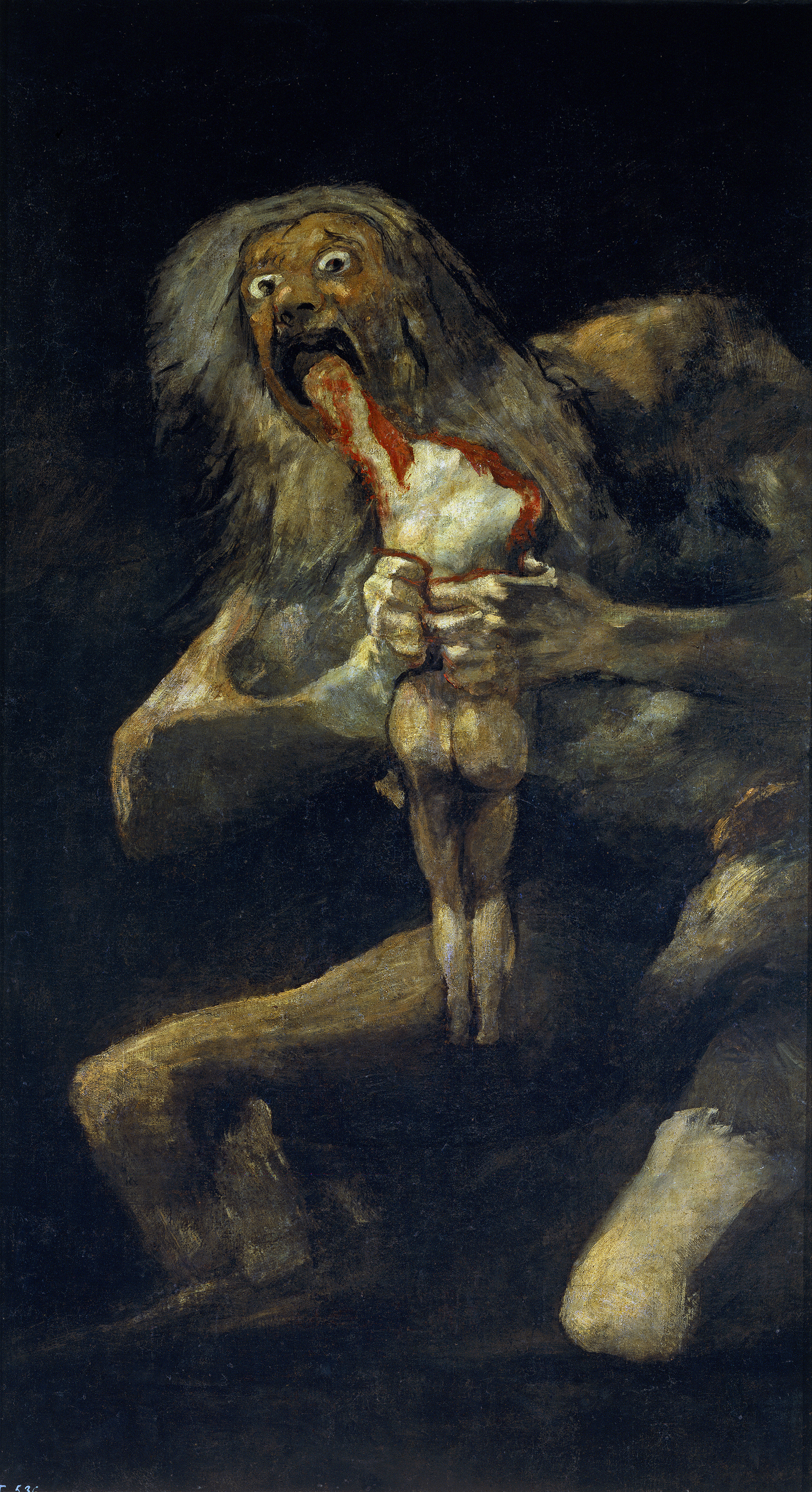
The work wasn't meant to hang in a museum. Francisco Goya painted this terrifying scene directly on the walls of his own home late in his life. The work belongs to a series of dark paintings created in almost total isolation.
Around 1819, Francisco Goya moved into a house near Madrid known as the Quinta del Sordo. Elderly, ill, and deaf for several decades, the painter was going through a period marked by political disillusionment and deep pessimism.
Inside this house, Goya created directly on the walls a series now called the "Black Paintings." Unlike several of his previous official works, these images don't seem intended for public or the Spanish court.
Saturn Devouring His Son depicts the Roman god Cronus violently consuming the body of one of his children to avoid being overthrown by his offspring. Goya transforms the traditional mythological subject into an almost hallucinatory vision. The mutilated body, enlarged eyes, and brutal contrast between darkness and pale flesh produce a psychological violence unusual in European painting of the period. Even anatomical proportions become unstable.
After Goya's death, the paintings were detached from the walls and transferred to canvas in the 19th century. This operation saved the works but probably modified a significant part of their original appearance and their physical relationship with the house's domestic space.